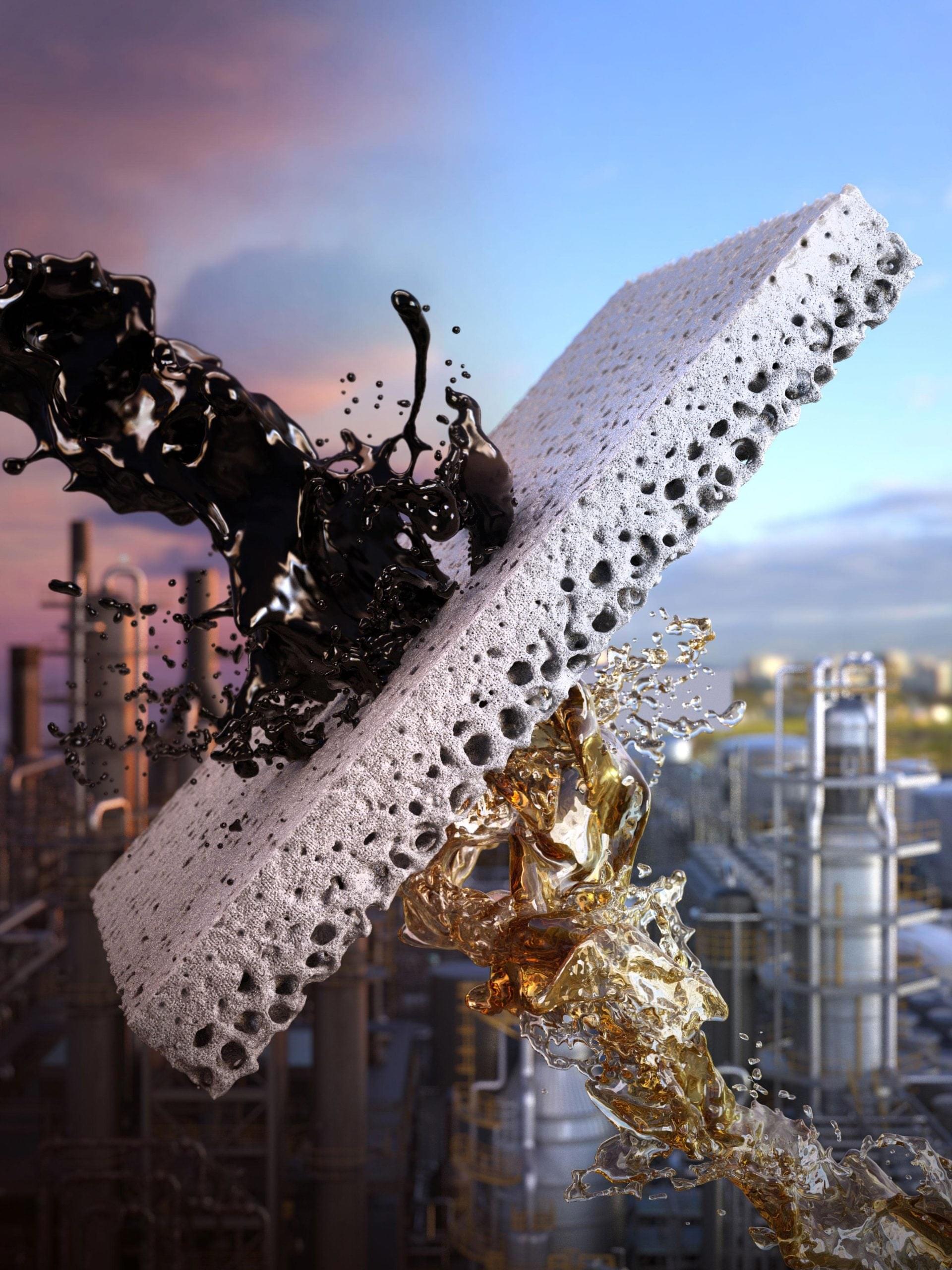
A simple membrane uses crude oil’s own deposits to separate lighter components at room temperature, with simulations suggesting nearly one-third less energy use when paired with distillation.
Refineries heat crude oil above 350°C (662°F) to separate a mixture that supplies transportation fuels and raw materials for plastics, packaging, textiles, and other consumer products. This century-old process, called distillation, vaporizes the oil and then cools the vapor to recover different fractions. Worldwide, crude oil distillation consumes approximately 1,100 terawatt-hours of energy each year, roughly the annual output of 130 gigawatt-scale nuclear power plants operating continuously.
An international research team has demonstrated a simple, inexpensive membrane that could handle part of this separation at room temperature, without heating. As crude oil flows through it, components of the oil create the narrow channels that allow the membrane to distinguish between lighter and heavier molecules.