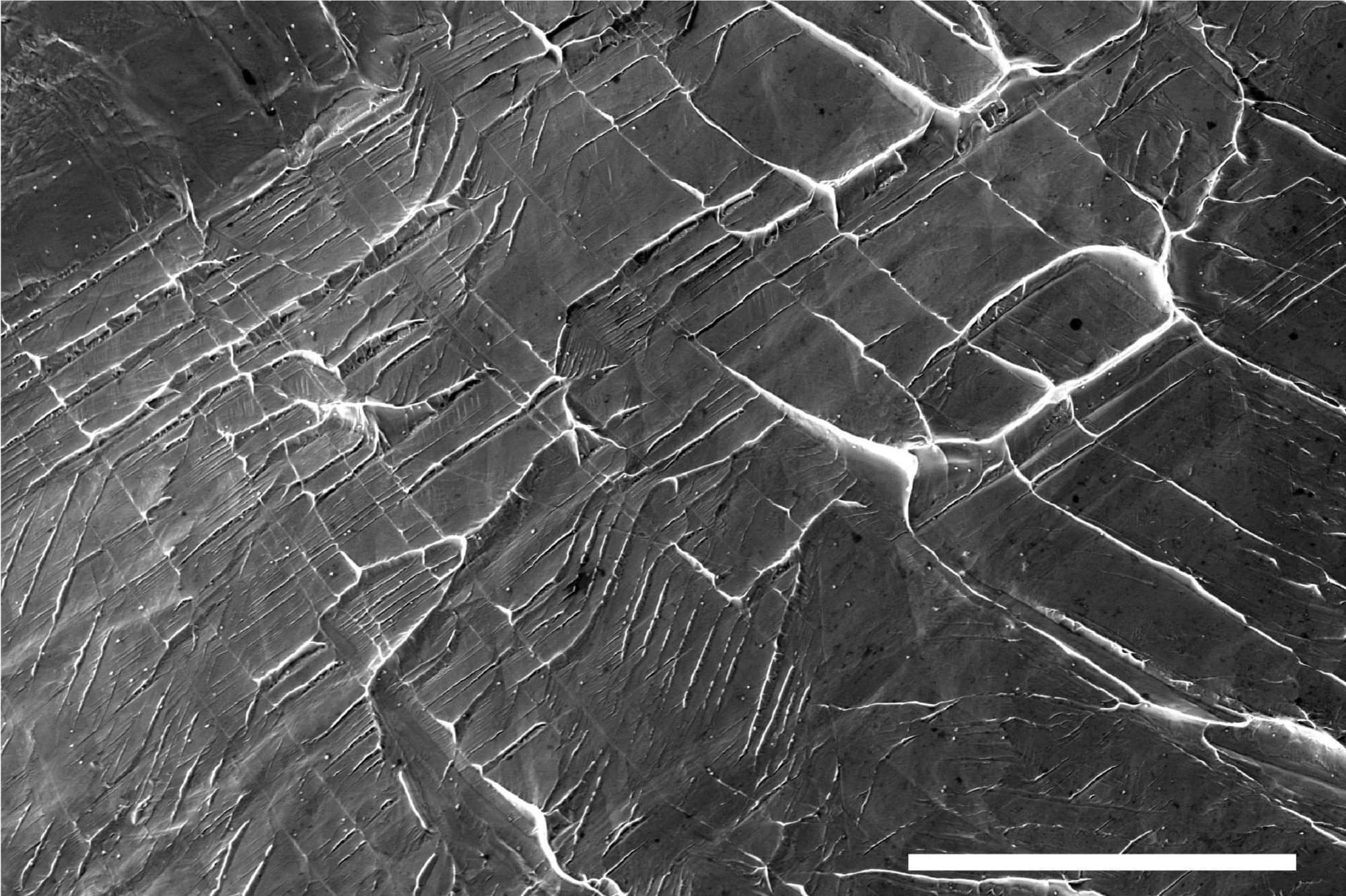
Two experimental alloys resisted cracking at −424°F by forming new crystal defects, offering a possible route to tougher metals for extreme cold.
Most metals become stronger as they cool, but some also become more vulnerable to breaking. Iron, tungsten, and chromium belong to a class called body-centered cubic metals, whose atomic arrangement can make them increasingly brittle as temperatures fall. A crack that the metal might otherwise accommodate by bending or stretching can instead cause a fracture.
That ability to deform depends heavily on the movement of dislocations, line-like defects in the metal’s crystal structure. At low temperatures, these defects become harder to move, limiting how much the material can deform to relieve the forces building up around a crack.