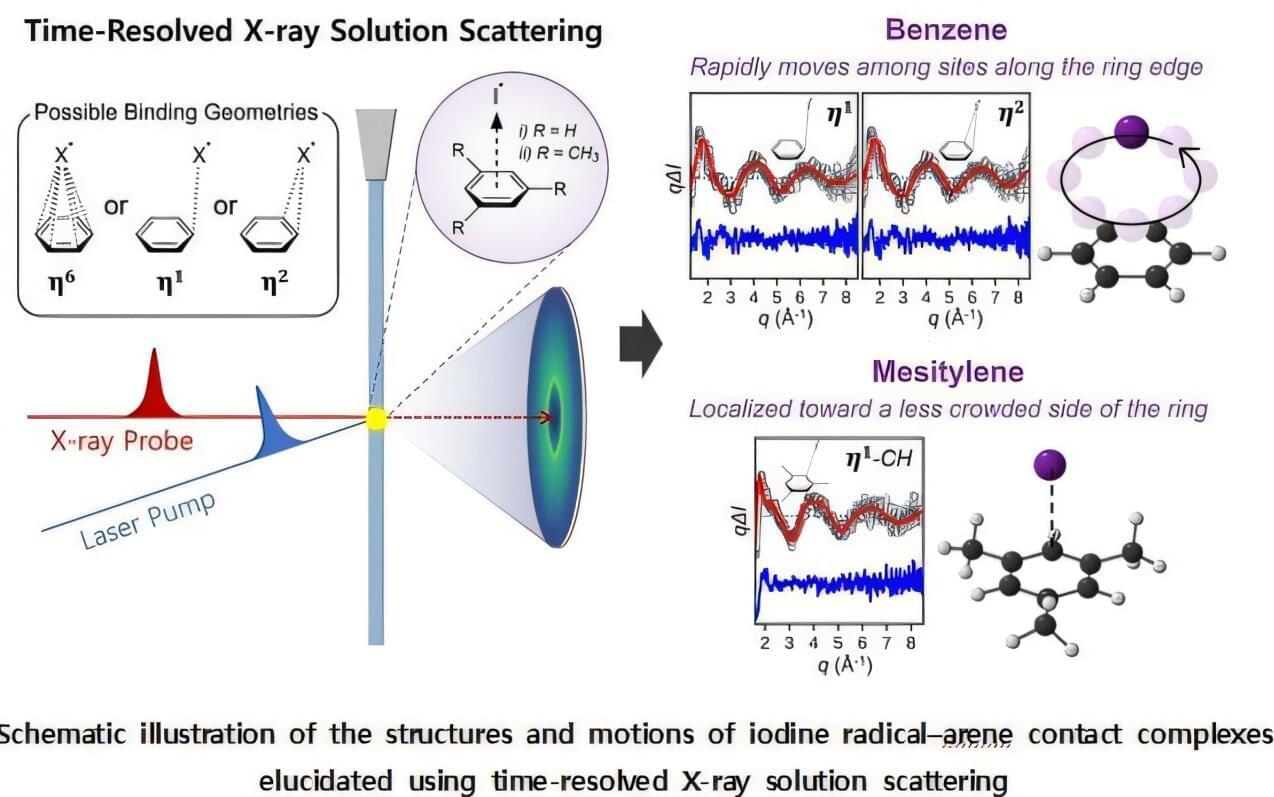
Chemical reactions have their own “impatient molecules.” Unable to stay still even for a moment, they latch onto other molecules indiscriminately. Researchers have now found that even these molecules change where they “sit” and how far they roam depending on who their neighbors are. The findings are expected to help scientists make better medicines and materials by directing reactions only to the desired sites.
A research team led by Professor Kyung Hwan Kim of the Department of Chemistry at Pohang University of Science and Technology, in collaboration with Professor Seung Jun Hwang’s team in the Department of Chemistry at KAIST, captured the first encounters between radicals and neighboring molecules on a timescale of one 10 billionth of a second, or 100 picoseconds.
The team found that the structure of the neighboring molecule changes where a radical resides and the range over which it moves. The study was published in the Journal of the American Chemical Society.