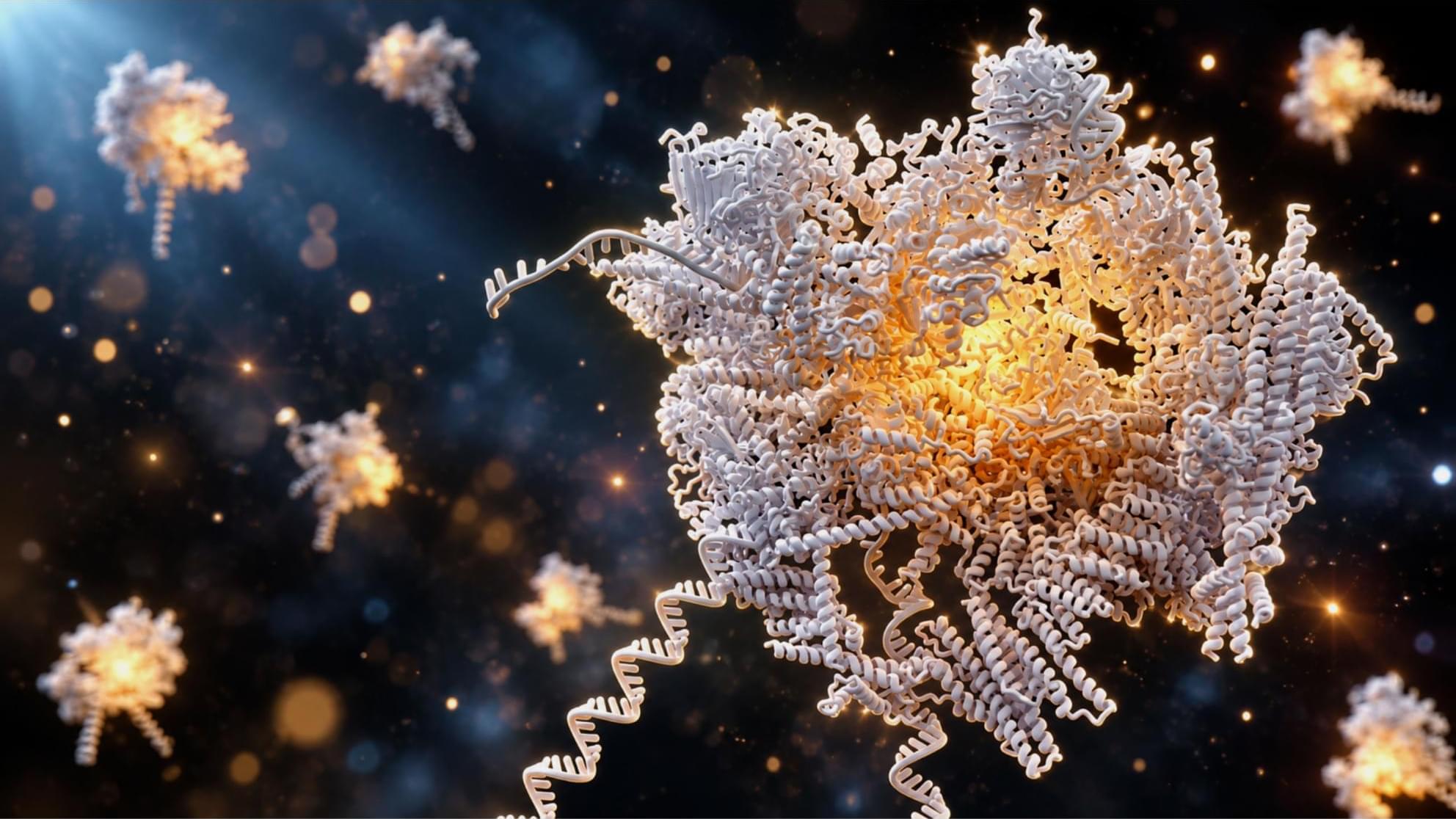
Researchers have visualized two key stages of RNA processing in parasites that cause diseases such as sleeping sickness, Chagas’ disease, and leishmaniasis.
For nearly 40 years, scientists have known that trypanosomatid parasites depend on an unusual system for processing RNA. Now researchers have captured that machinery at near-atomic resolution, showing how its components assemble and operate during a reaction the parasites need to survive.
The study, conducted by researchers at the University of Liège and Rockefeller University, reconstructed the three-dimensional architecture of the trans-spliceosome, a massive molecular machine that prepares genetic messages for use inside trypanosomatid cells. The structures also identify features that differ from the RNA processing machinery found in humans, providing a potential starting point for developing drugs that interfere selectively with the parasites.