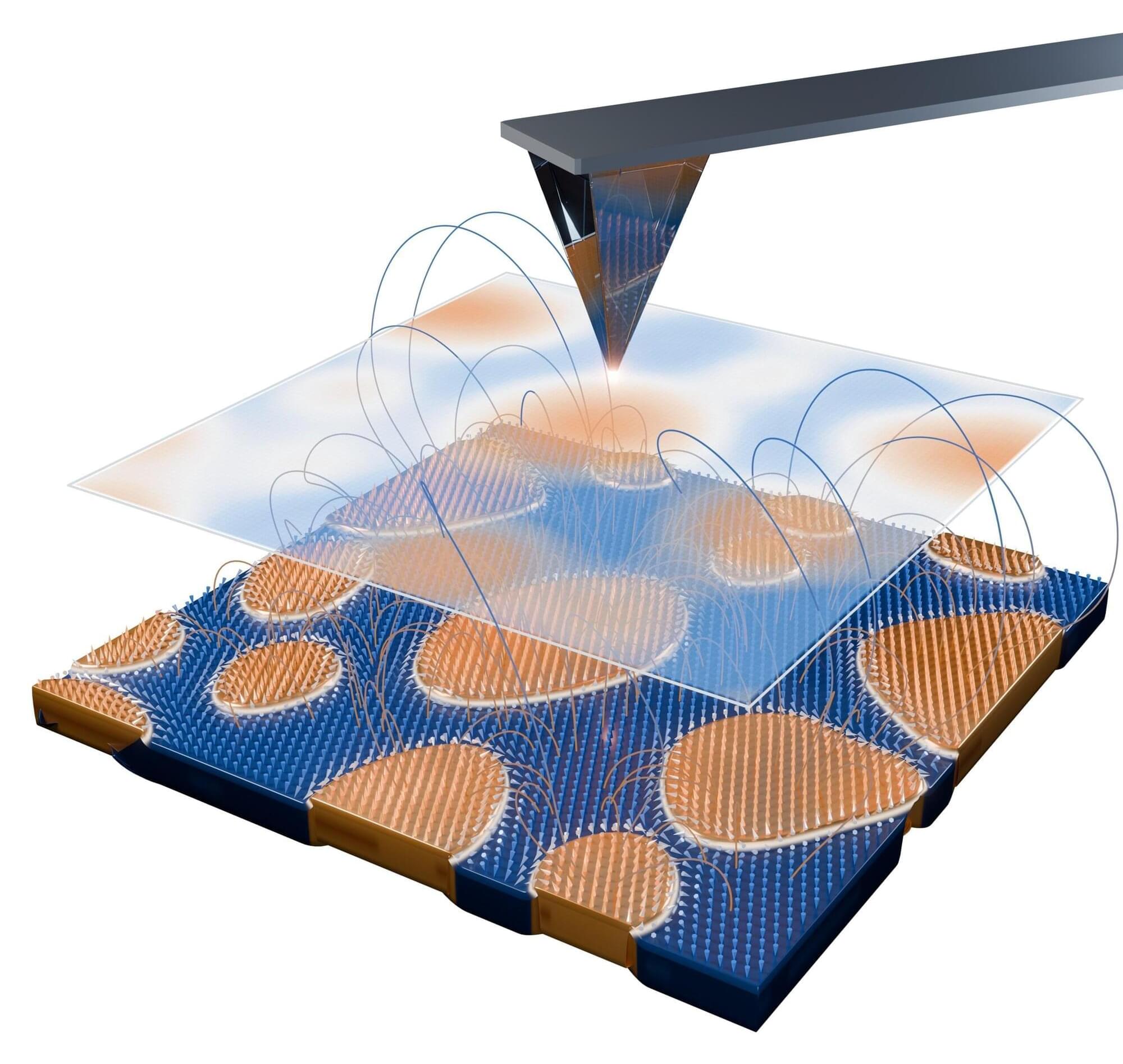
To build faster and more energy-efficient computers, researchers need to understand nanoscale magnetic materials. But looking inside these tiny magnets is surprisingly difficult: Modern microscopes only measure the magnetic field outside the material, not the magnetic pattern inside. Because many different internal patterns can produce the exact same field, working backwards has long been a challenge.
Physicists at the University of Vienna, together with colleagues in Dresden, Singapore, and Ulsan, have now solved this problem by building the laws of physics directly into modern machine learning methods. Their method reveals the realistic magnetic structure and even determines the precise distance between the sensor and the sample. The study is published in Physical Review Letters, and the software is freely available as open source.