For thousands of years, humans shaped their world with stone, wood and bone. Metallurgy, the art and science of working with metals such as copper, bronze and iron, marked a turning point in human history. The mining that fueled metalworking also shaped Europe’s and the Mediterranean’s economies and politics over centuries.
A recent study found clues that helped reconstruct the region’s 6,000-year history of lead and silver mining, metal production and trade, a task hindered by scattered archaeological evidence. This was possible because peat bogs act like nature’s archive. As these wetlands slowly build up, they capture airborne dust layer by layer, preserving a record of fallout from silver mining over centuries.
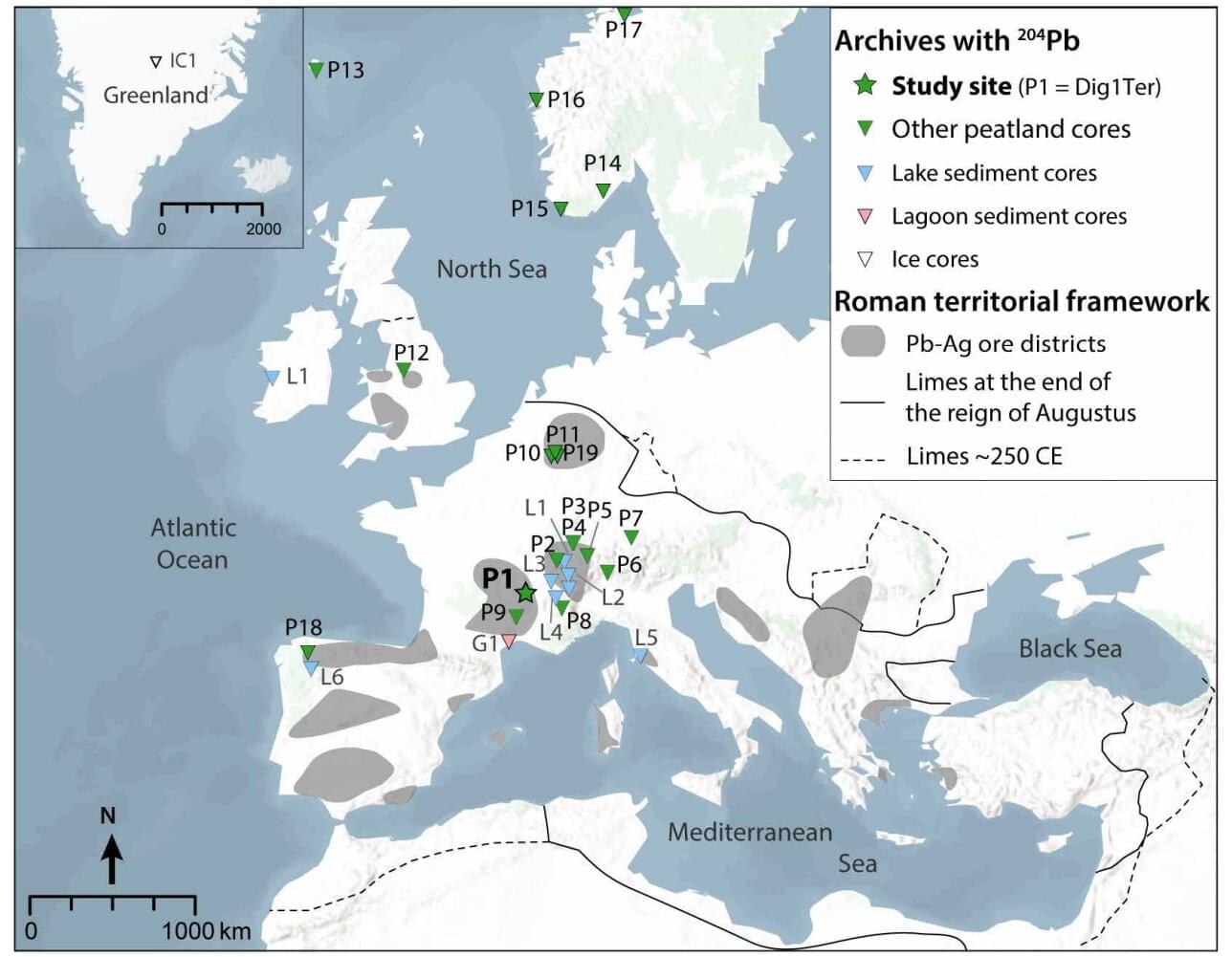
In this study, researchers drilled a peat core at Pilat Massif, an upland area of south-central France. By studying lead (Pb) isotope signatures preserved in peatlands alongside data from the reference Pb Isotope database, researchers developed the Environmental Match Intensity Index (EMII), which revealed that the earliest major lead-silver mining signal emerged during the Late Neolithic and Chalcolithic periods (3700–2200 B.C.), centered around Laurion and the Cycladic islands in Greece.