Quantum computers need qubits that can be controlled both quickly and reliably. Yet making semiconductor spin qubits faster often makes them more sensitive to electrical noise, creating a difficult trade-off.
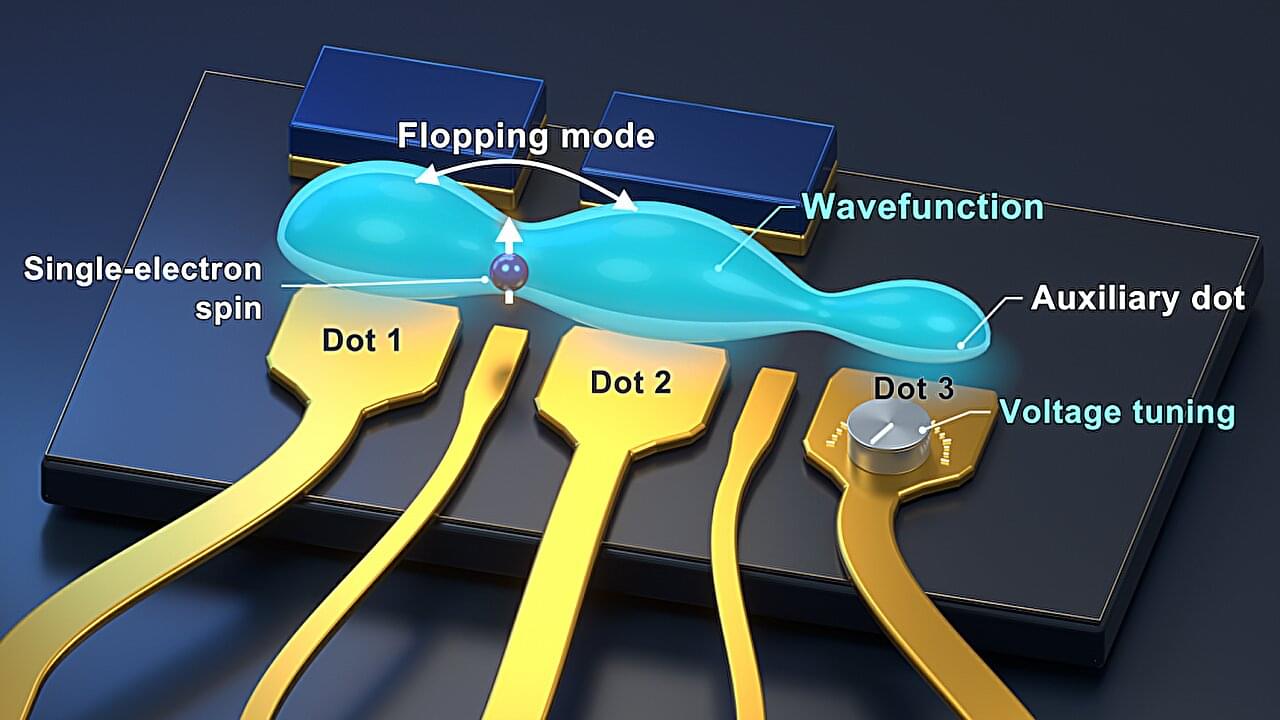
Researchers at the University of Osaka and their collaborators have now demonstrated a way to loosen this constraint by adding one extra quantum dot, allowing speed and noise resistance to be tuned more independently after the device has been made.
The research is published in the journal npj Quantum Information.