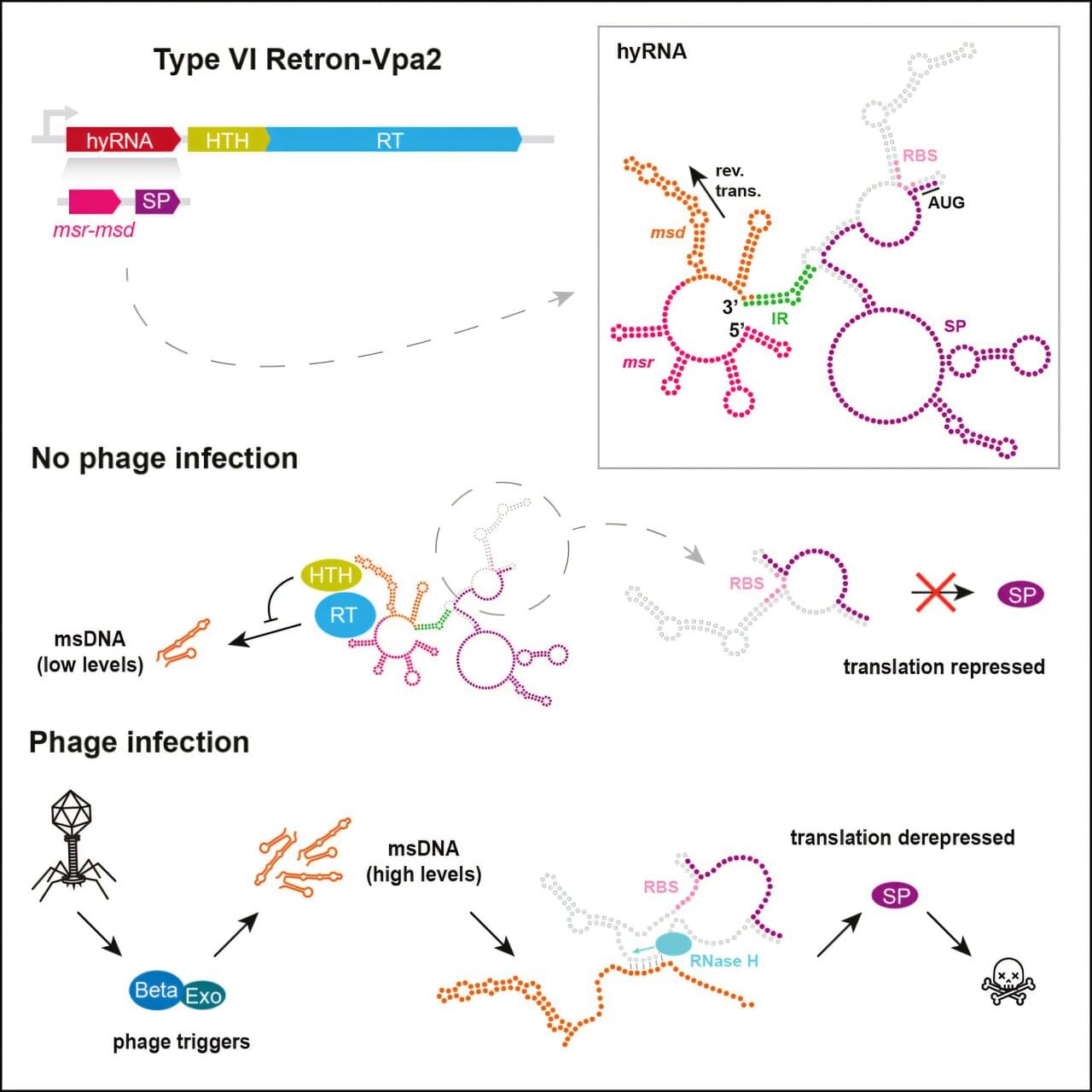
Researchers at Gladstone Institutes have uncovered an unusual bacterial immune system that operates in reverse of known defenses. The discovery, published in Molecular Cell, details the mechanics of “type VI retrons”—a counterintuitive class of bacterial defenses. More than just a biological curiosity, decoding these complex systems provides a molecular blueprint that scientists can adapt to engineer more efficient DNA-editing tools for human health and therapies.
“This is, by far, the strangest of the retron systems that we or anyone else has come across,” says Gladstone investigator Seth Shipman, Ph.D., senior author of the new study. “These retrons operate with Rube Goldberg–level complexity, using molecular mechanisms that we would never have thought to invent, but that we’ll use in future technologies.”
Bacteria have long evolved specialized defenses to destroy phages, which are viruses that target bacterial cells. A line of defense, known as retrons, recognizes viral attacks and triggers self-destruction to protect the broader bacterial colony.