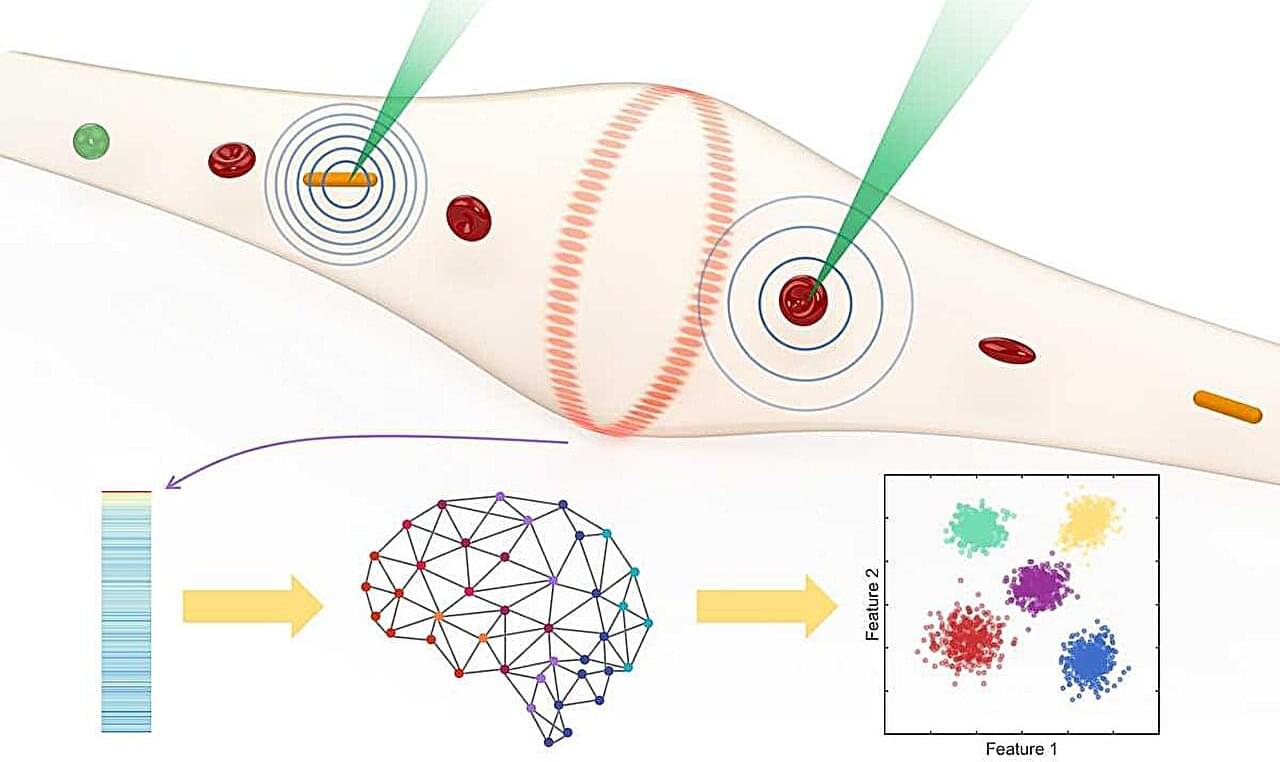
Finding a single cancer cell in a tube of blood is a bit like finding a needle in a haystack. As researchers seek to detect ever-smaller and rarer targets, from viruses to circulating tumor cells in blood, the demand for ultrasensitive, robust sensors that are practical for real-world samples continues to grow.
A major challenge is doing this without adding fluorescent tags or other labels. Most label-free optical sensors work only when the targets pass extremely close to or bind to a tiny sensing area on the device. At low concentrations, many particles never hit that spot, and even when they do, their signals can be drowned out by background noise, limiting detection efficiency and making rare targets especially difficult to find.
This limitation is shared by many optical microsensors, including whispering-gallery-mode (WGM) resonators, among the most sensitive optical sensors ever developed. These devices can detect individual nanoparticles and molecules with exceptional precision, but their sensing region is typically confined to a very small area close to the sensor surface.