Bacteriophages, or viruses that infect bacteria, have a fiendishly simple purpose in life: attach to a bacterial cell, inject their DNA and then use the host’s genetic machinery to reproduce. In doing so, they may have evolved some of the most efficient gene-editing tools ever seen in nature.
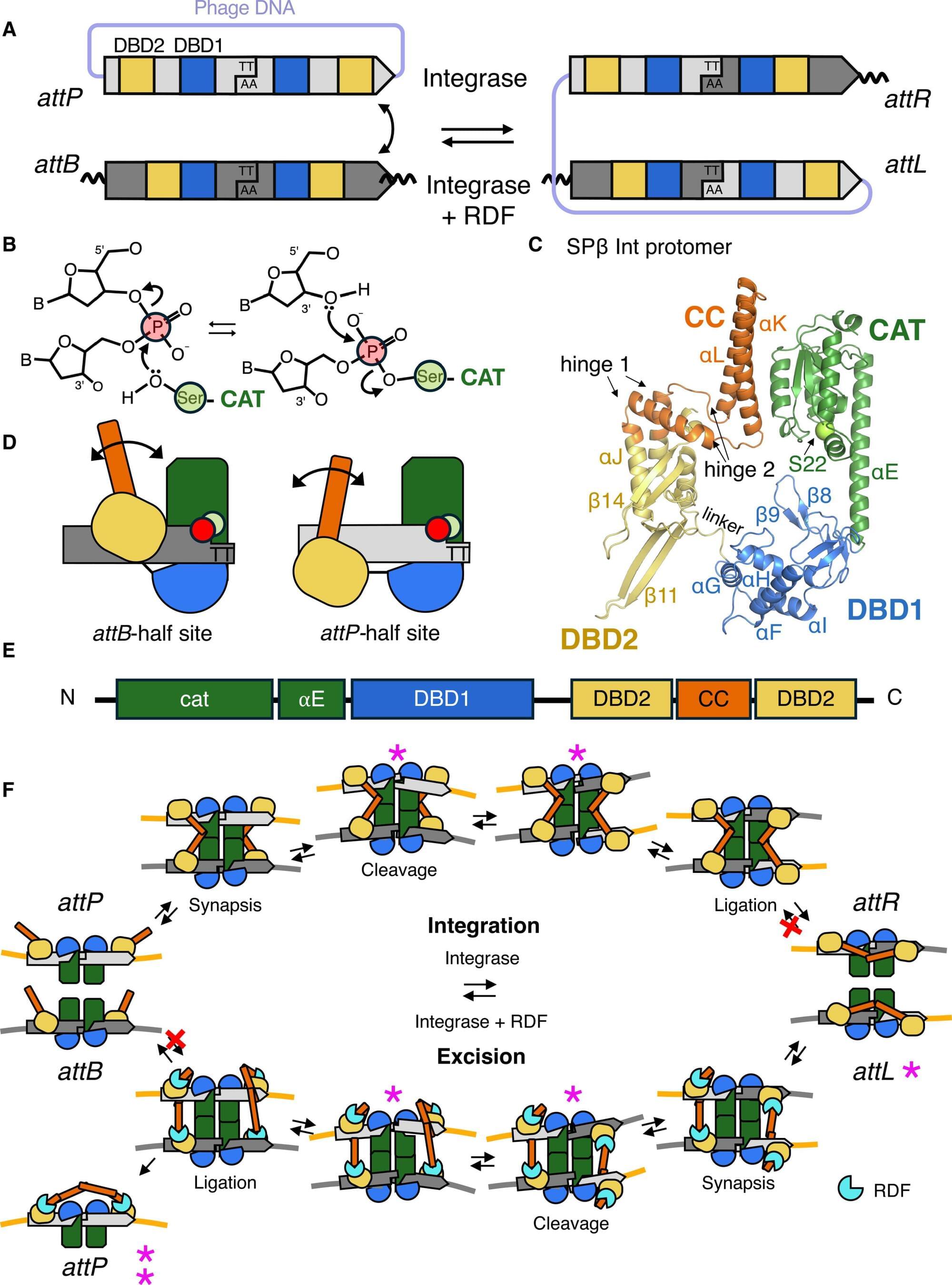
New research by scientists at the University of Chicago shows how bacteriophages (“phages” for short) use a special class of enzymes to recognize specific DNA sequences in their host and insert large stretches of their own DNA with remarkable precision.
The study also shows how these enzymes can switch directions and remove the phage DNA without a trace, offering new insights that could help scientists develop more precise tools for genome engineering and synthetic biology.