Karl Deisseroth just won the Nobel Prize.
He showed that brain cells can be turned on/off by shining blue light on them, after inserting a light-sensitive protein from algae.
The method was named optogenetics and has been used worldwide to link specific neural circuits to behavior.
But Ed Boyden is the main author of this paper? I was wondering.
It’s a question many people in neuroscience are asking today, and there are a few layers to it.
First, what the prize actually honors. The 2026 Nobel in Physiology or Medicine went to Karl Deisseroth, Peter Hegemann, and Georg Nagel “for their discoveries concerning light-gated ion channels and optogenetics” — essentially two scientific contributions: discovering the light-gated ion channel (Hegemann and Nagel’s channelrhodopsin work in the early 2000s) and turning it into a tool for controlling neurons (Deisseroth). Boyden’s name does appear in the Nobel committee’s own advanced documentation, which explicitly describes the 2005 paper as work by “Deisseroth, Nagel and collaborators” — the committee treats Deisseroth as the driving scientific force behind the neural-control half of the discovery.
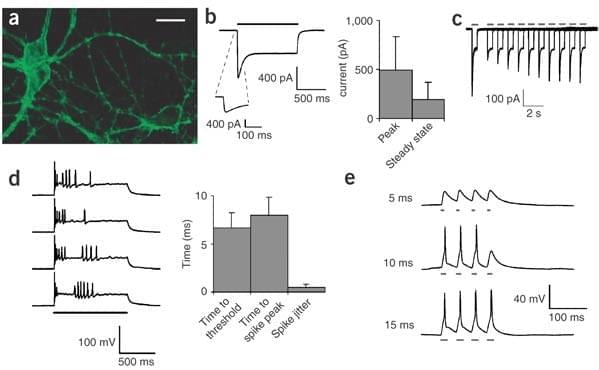
Second, why first authorship doesn’t settle it. In the 2005 paper (Boyden, Zhang, Bamberg, Nagel, Deisseroth), Boyden was the first author, but Deisseroth was the senior/last author — meaning it was his lab, his conception of the project, and his scientific program. Nobel committees don’t reward authorship order; they try to identify who originated the decisive insight. Boyden was a graduate student at the time, doing the experiments within Deisseroth’s research program (Boyden himself has described working first in Richard Tsien’s lab, then moving into Deisseroth’s new Stanford lab in spring 2005).
Third, the hard limit of three. Nobels can go to at most three people, and optogenetics had more than three legitimate claimants — Ernst Bamberg and Gero Miesenböck (who did related light-control work in 2005) were also left out. The committee essentially drew the line at: the molecule’s discoverers (Hegemann, Nagel) plus the person who turned it into a neuroscience tool (Deisseroth). Notably, the same trio won the 2021 Lasker Award, so this exclusion pattern isn’t new — it reflects a consistent view of where the “discovery” lies, though many scientists (and Boyden himself, one assumes) would disagree.
Fourth, Boyden is hardly uncredited. He shared the 2013 Brain Prize with all six optogenetics pioneers — Bamberg, Boyden, Deisseroth, Hegemann, Miesenböck, and Nagel — and won the 2016 Breakthrough Prize, whose citation names him jointly with Deisseroth for “the development and implementation of optogenetics”
So the honest answer is: the Nobel committee made a judgment call about whose insight constituted “the discovery,” picked the senior architect rather than the junior first author for the neural-control half, and was constrained by the three-person rule. Whether that’s fair is legitimately debatable — but it follows how the prize has treated similar cases rather than being a dismissal of Boyden’s contribution.
#Neuroscience #Optogenetics #NobelPrize
Nature Neuroscience — Millisecond-timescale, genetically targeted optical control of neural activity. Nat Neurosci 8, 1263–1268 (2005). https://doi.org/10.1038/nn1525