Hydrogen is the simplest element in the periodic table, consisting of just one proton and one electron. In chemistry, however, the smallest of atoms is anything but simple. First produced by Nobel laureate Irving Langmuir over a century ago, single hydrogen atoms (H•) are so reactive that they are almost impossible to prepare and use.
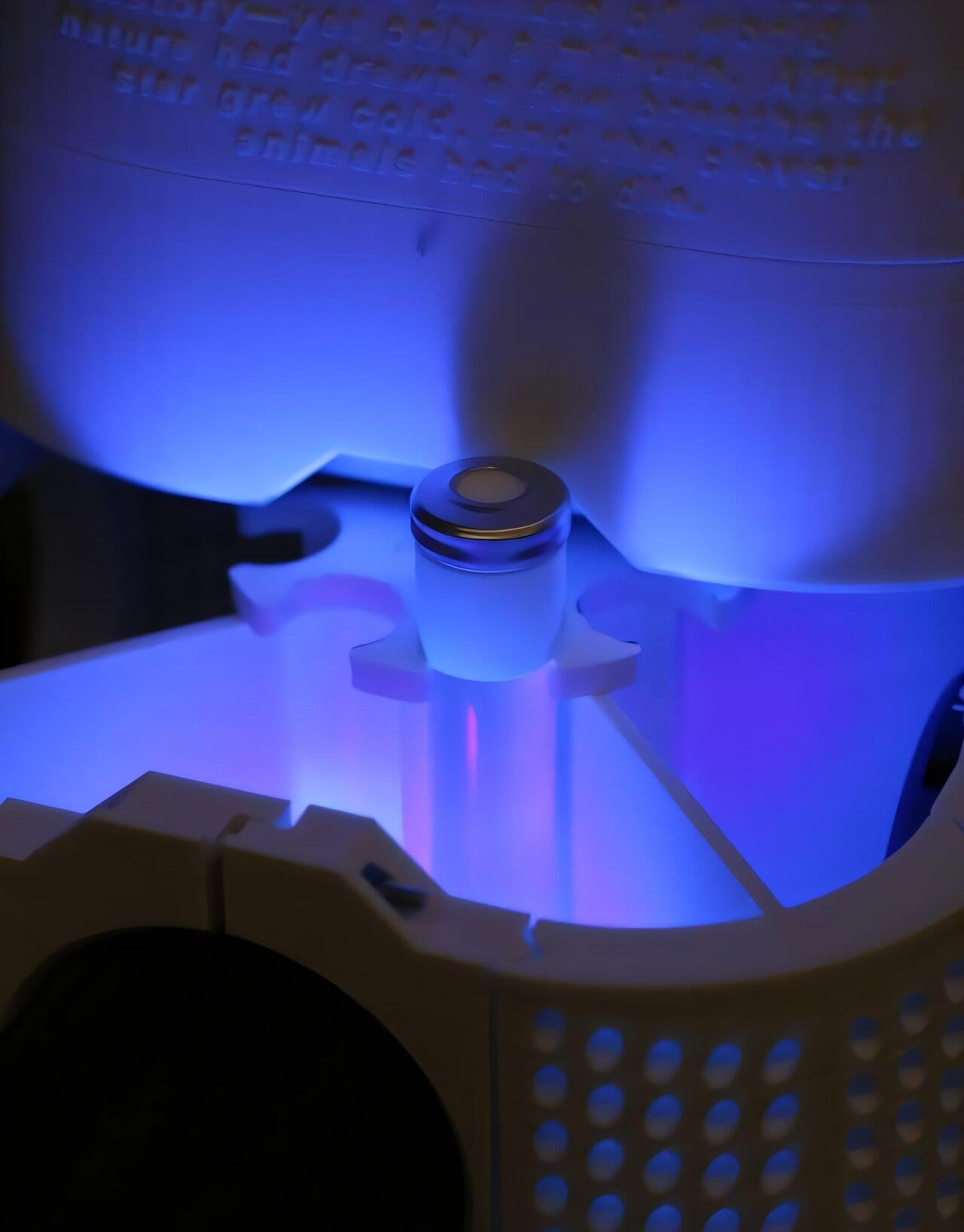
In an international collaborative effort, researchers at the Max Planck Institute of Colloids and Interfaces, University College London and Imperial College London have found a solution to this problem. Using light, they generate hydrogen atoms under mild conditions and use them to reduce organic molecules without metals.
Their findings have been published in the Journal of the American Chemical Society.