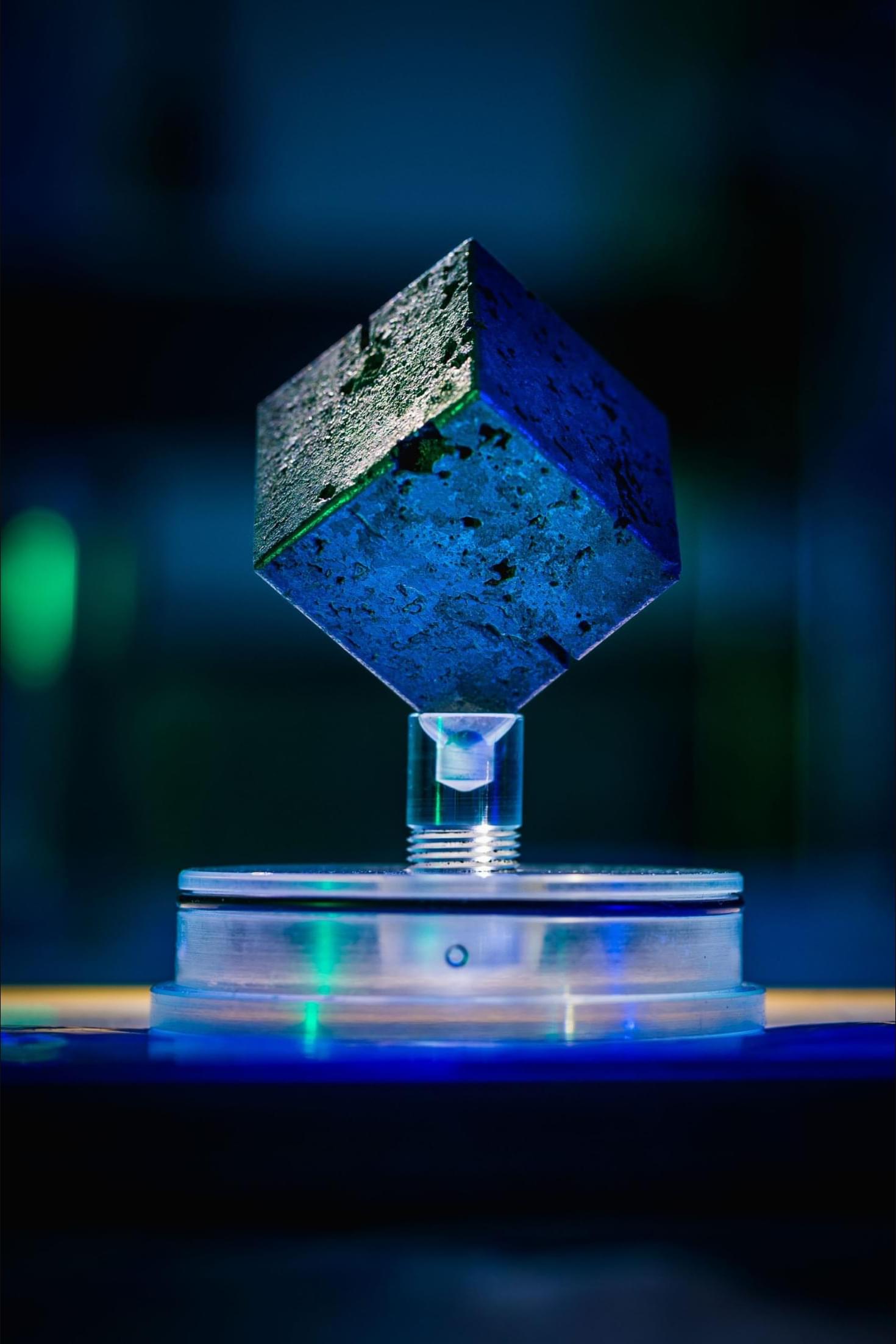
Nazi Germany’s final nuclear reactor was nowhere near ready, lacking roughly half the uranium and heavy water it needed to work.
When American forces dismantled Nazi Germany’s final experimental nuclear reactor in 1945, they found a machine that its scientific leader, Werner Heisenberg, would later describe as tantalizingly close to working. Known as the B8 pile, the reactor relied on natural uranium and heavy water to sustain the neutron reactions needed to reach criticality. Yet new analysis suggests that no amount of last-minute engineering could have pushed the design across that threshold. Germany simply lacked enough of the essential materials.
Reconstructing the B8 pile decades later, Timothy Koeth and his colleagues analyzed two surviving cubes of natural uranium from Germany’s wartime nuclear program alongside historical records, technical reports, correspondence, and other archival material. Their goal was to test Heisenberg’s claim against the physical requirements of the reactor itself.