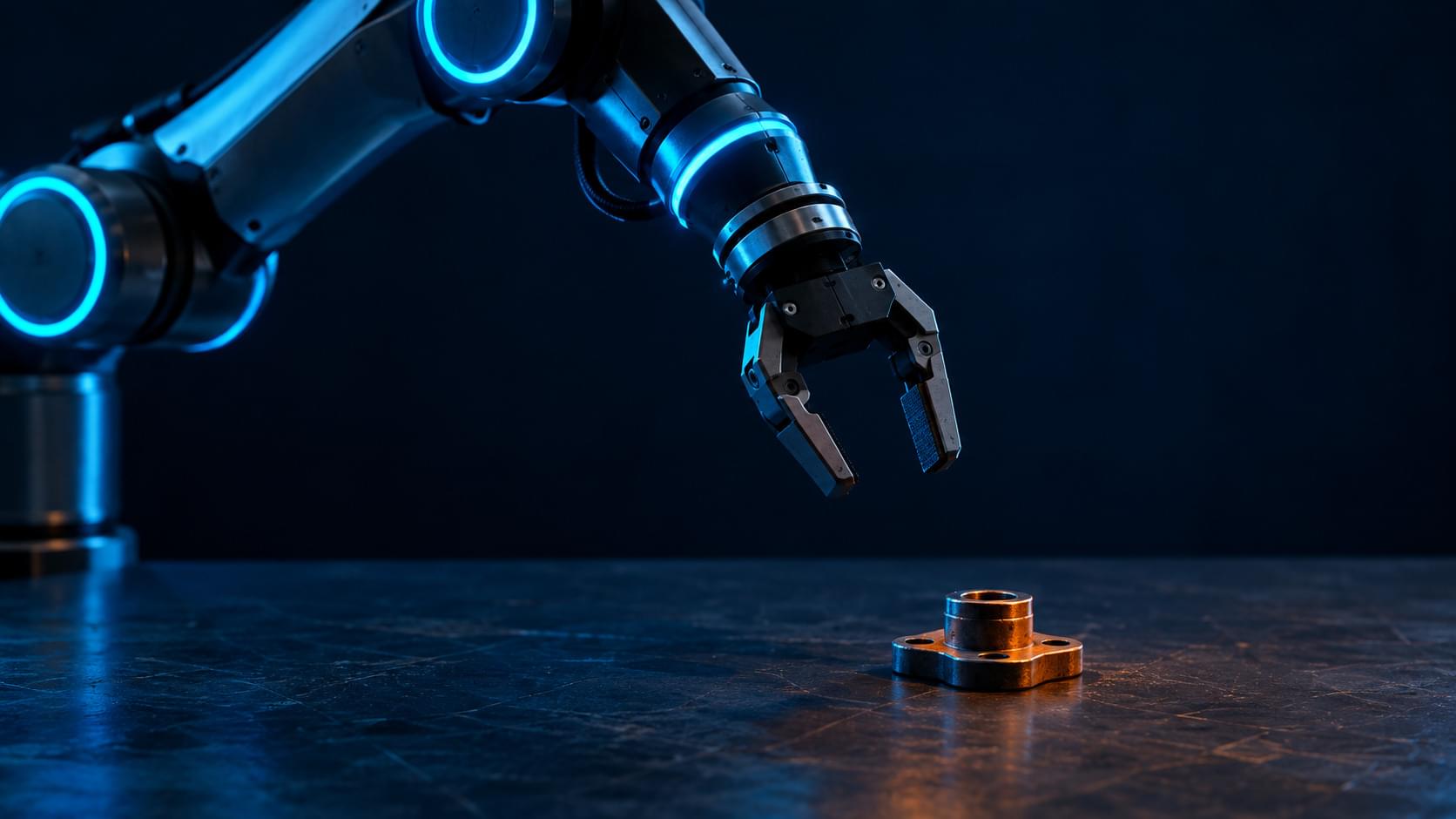
A new benchmark from Dalian University of Technology (VA-Bench) tested 12 multimodal AI models on robot-arm manipulation tasks.
The results are consistent and uncomfortable: • Object location accuracy: ~100% • Task understanding: ~99% • Whole-task success (best model): only 53.93%
The more important gap is between detecting an error (73.6%) and correcting it in real time (46.7%). Dual-arm tasks collapsed further — single-arm success around 65%, dual-arm only 11%.
Simulation is teaching models what to see and what needs to be done. It is still failing to teach them how to reliably complete the action when conditions change.
For buyers evaluating robotics vendors: treat simulation demo success rates as an upper bound, not a production prediction. Ask for dual-arm success rates on held-out tasks, error-correction rates, and performance when object geometry varies before approving any pilot.
Full analysis:
#Robotics #Simulation #IndustrialAI #Procurement
A new benchmark from Dalian University of Technology tested 12 multimodal AI models on robot-arm tasks. Every model could locate objects at ~100% accuracy. Every model understood what needed to be done at ~99%. Yet the best model completed only 53.93% of whole tasks. Industrial robotics training sims teach perception and reasoning effectively, but the translation from “understanding” to “doing” remains unsolved. For procurement teams, this isn’t an AI research problem — it’s a deployment timeline and budget problem.
Industrial robotics training sims just produced a number that should reshape how buyers evaluate vendor claims. A research team led by Dalian University of Technology released VA-Bench, a benchmark testing whether general-purpose multimodal models can turn what they see into successful robot-arm actions. Across 12 model configurations, the top performer completed 53.93% of tasks. But the same models scored 100% on locating targets and 99.6% on understanding what manipulation was required.
The gap between understanding and doing is now measurable. It is also the gap most procurement teams have been paying for without realizing it.