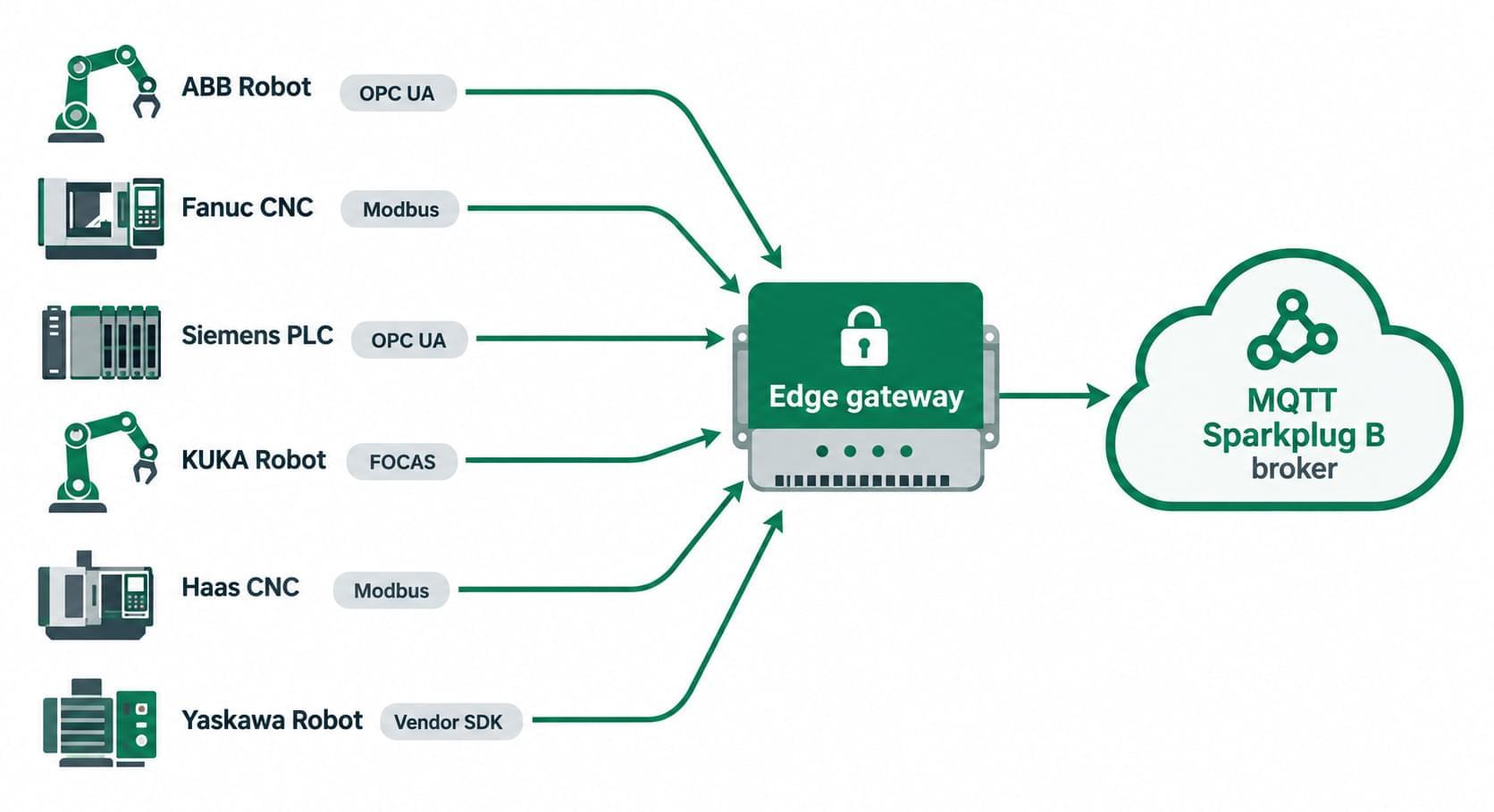
OPC UA and MQTT Sparkplug B are now the accepted answer to industrial IoT protocol fragmentation. McKinsey estimates interoperability is required to capture around 40% of IoT’s total potential value.
But adopting both standards doesn’t end fragmentation. It relocates it to the edge gateway.
Machines still speak OPC UA. An edge gateway still has to translate that into Sparkplug B before data reaches the broker. That gateway is usually a specific vendor’s software, running specific translation logic, with mapping rules that may not be exportable.
A unified namespace built on someone else’s closed gateway is still a point of control the buyer doesn’t own.
The fix isn’t just picking the right protocols. It’s checking who owns the layer that bridges them — and requiring an exportable, documented mapping configuration before signing.
Full analysis:
#IndustrialIoT #IIoT #OPC UA #MQTT #SmartFactory
OPC UA and MQTT Sparkplug B are now the accepted answer to industrial IoT protocol fragmentation, and McKinsey estimates interoperability is required to capture around 40% of IoT’s total potential value. But adopting both standards doesn’t end fragmentation — it relocates it to the edge gateway, where a vendor’s proprietary translation software becomes the new lock-in point.
A unified namespace built on someone else’s closed gateway is still a point of control a buyer doesn’t own. The fix isn’t picking a protocol; it’s checking who owns the layer that bridges them.
Industrial IoT protocol fragmentation is usually described as a technical problem: PLCs, robots, CNC machines and sensors from different vendors speak different languages, so sharing data takes custom integration work. That’s accurate, but incomplete. Fragmentation persists even after a plant adopts the recommended fix, because the standard answer — OPC UA for device integration, MQTT with Sparkplug B for cloud transport — still leaves one layer unstandardized: whatever sits in between.