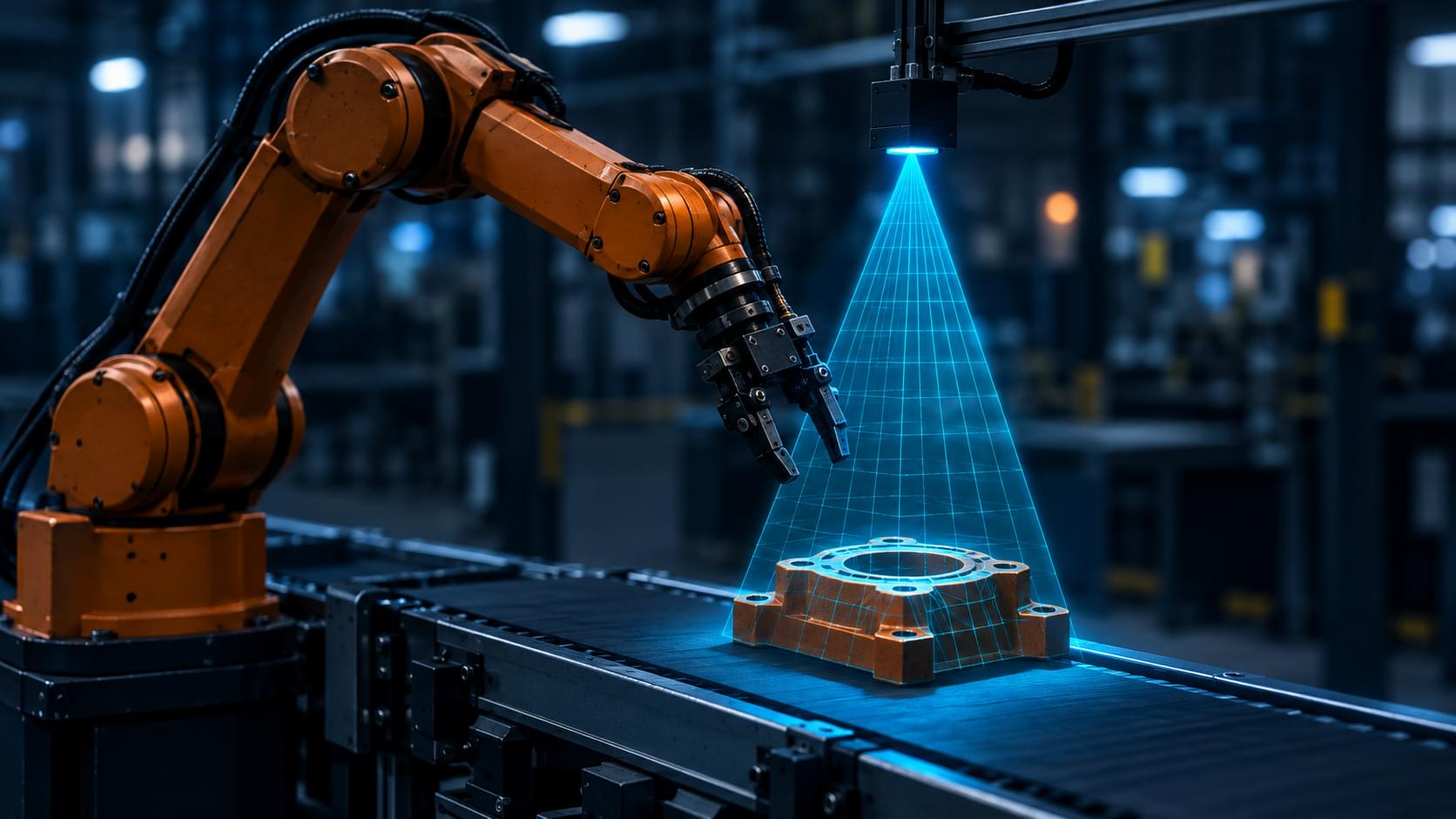
Inbolt raised $12.5 million (total funding now $34M) for its AI-powered 3D vision software for industrial robots.
Most robots on factory floors are effectively blind. They cannot handle part misalignment, tooling wear, or the small variations that happen on every real production line. When something shifts, they stall or produce defects.
Inbolt’s hardware-agnostic layer gives robots the ability to see, think, and adapt control loops in real time. It is already running on more than 200 robots across 100+ factories, including Bosch, Ford, Stellantis, and Toyota.
The investment logic is straightforward: a vision upgrade costs a fraction of a robot replacement and extends the useful life of equipment already deployed.
Capital is flowing into the software layer that makes existing robots useful — not just into new hardware.
Full analysis:
#IndustrialAI #Robotics #ComputerVision #SmartFactory
Inbolt raised $12.5 million on September 30 to expand its AI-powered 3D vision for industrial robots, bringing total funding to $34 million. The Paris-based company gives robots the ability to see, think, and adapt in real time—addressing the fact that most industrial robots are effectively blind. The industrial AI vision layer is where the money is moving: not into new robots, but into the software that makes the robots already on factory floors actually useful.
Industrial AI vision layer just attracted its clearest funding signal of the quarter. Inbolt announced $12.5 million in new funding on September 30, led by Shift4Good with participation from Bridges Climate Transition Partners, BNP Paribas Développement, and Ora Global. The round brings total funding to $34 million and will fund expansion in the US, where the company opened a Detroit office in 2026, plus entry into data centers and electronics manufacturing.
The company’s pitch is specific. Most industrial robots operating in highly automated factories are effectively blind. They cannot perceive part misalignment, tooling wear, or the small variations that occur naturally on every production line. When something shifts even slightly out of position, the robot either stalls, throws an error, or produces a defective part.