Tau is a protein that occurs naturally in the brain. It is essential for proper neuron development and for how neurons communicate with each other. The same protein, however, when misshapen or misfolded, can act as a driver of neurodegenerative diseases. Abnormal buildup of tau is a hallmark of Alzheimer’s disease, and scientists have also found an association between misfolded tau and more than 20 neurodegenerative diseases.
The prominent prion hypothesis proposes that misfolded proteins spread by forcing normally shaped proteins to copy their exact 3D structure. To test its validity, a recent study investigated at the atomic level how misfolded tau proteins spread and multiply through the brain.
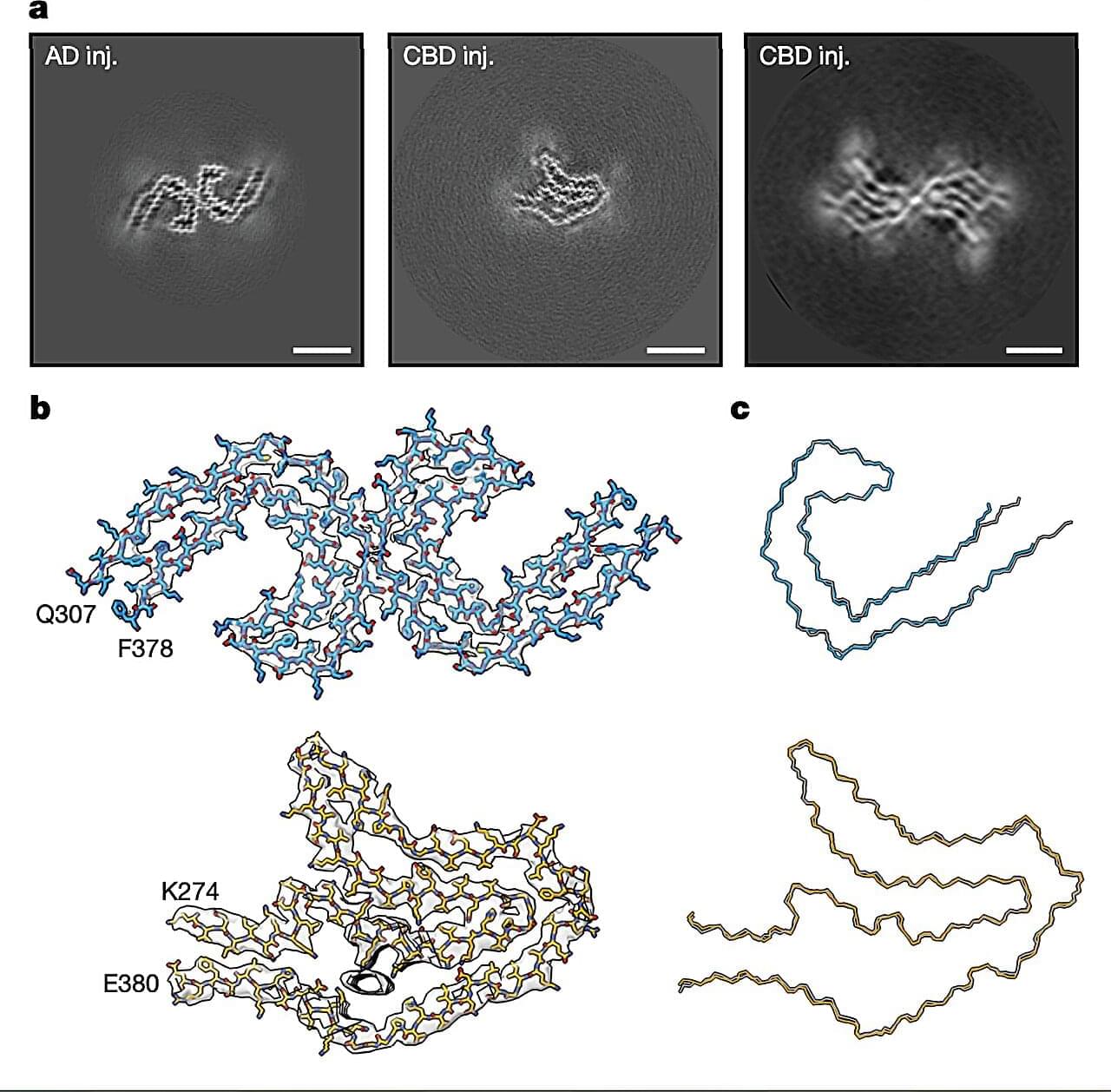
Researchers injected tiny amounts of human tau seeds from Alzheimer’s disease (AD) or corticobasal degeneration (CBD) into the brains of healthy mice. High-resolution microscopy that captured tau at the atomic level revealed that the mice’s own tau had misfolded into exact 3D structural copies of the diseased original seeds. The human seeds vanished within a week, but not before setting off a chain reaction in which the mice’s tau continued to form fibers with matching disease-specific folds and accumulate for the next nine to 12 months.