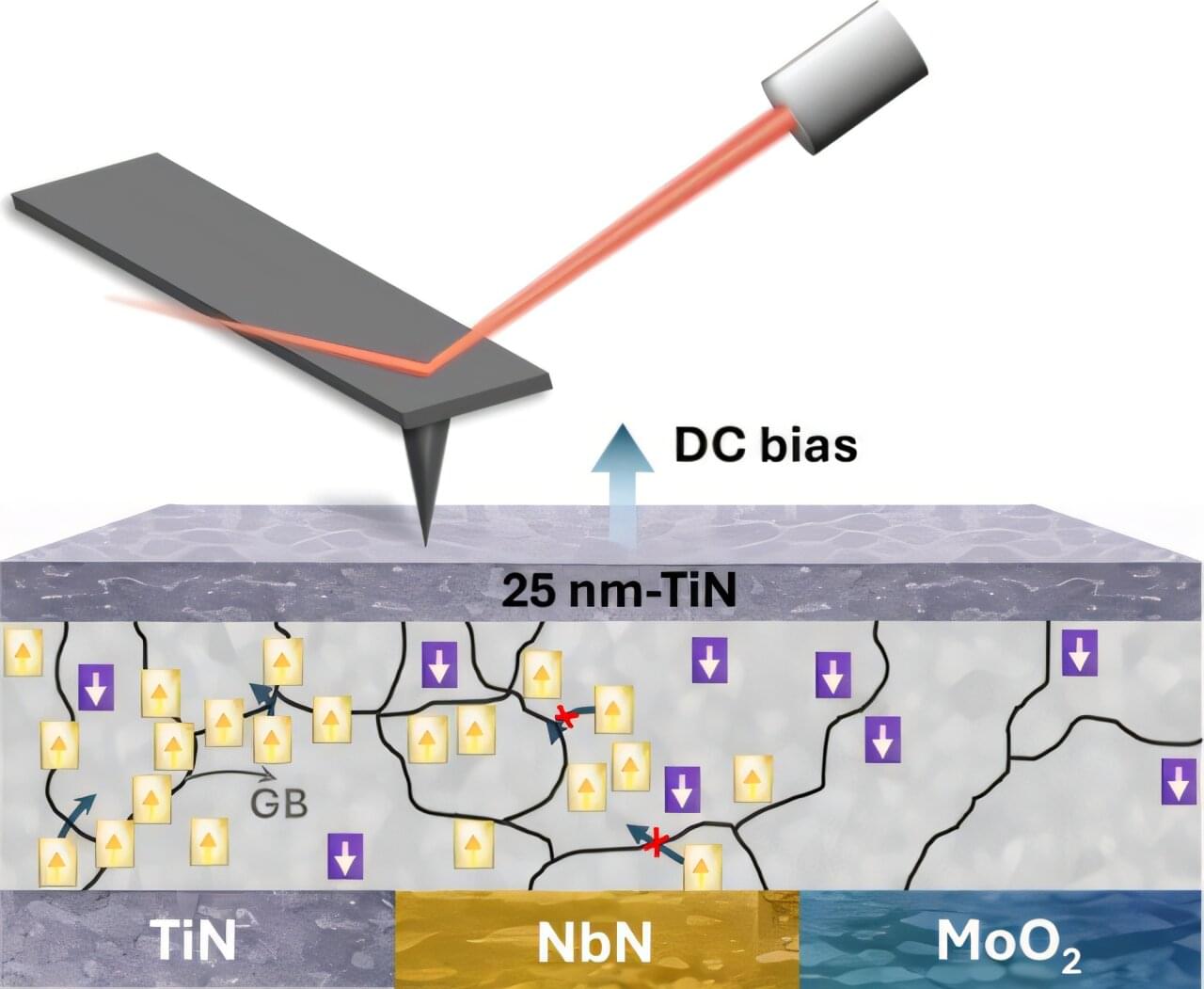
What happens at the nanoscale when information is written to memory? Researchers at KAIST have shown how tiny regions with a new polarization direction form while previously formed regions continue to expand in a promising ferroelectric material. By linking these nanoscale changes to electrical measurements, the team developed a model that captures both processes, offering a basis for designing faster and more stable memory.
A team led by Professor Seungbum Hong from the Department of Materials Science and Engineering has identified how information is recorded in hafnium zirconium oxide (HZO), a promising material for next-generation memory.
The study, published in the journal Nano Letters, was conducted in collaboration with Professor Byung Jin Cho’s team at KAIST’s School of Electrical Engineering and researchers at NaMLab/TU Dresden in Germany.