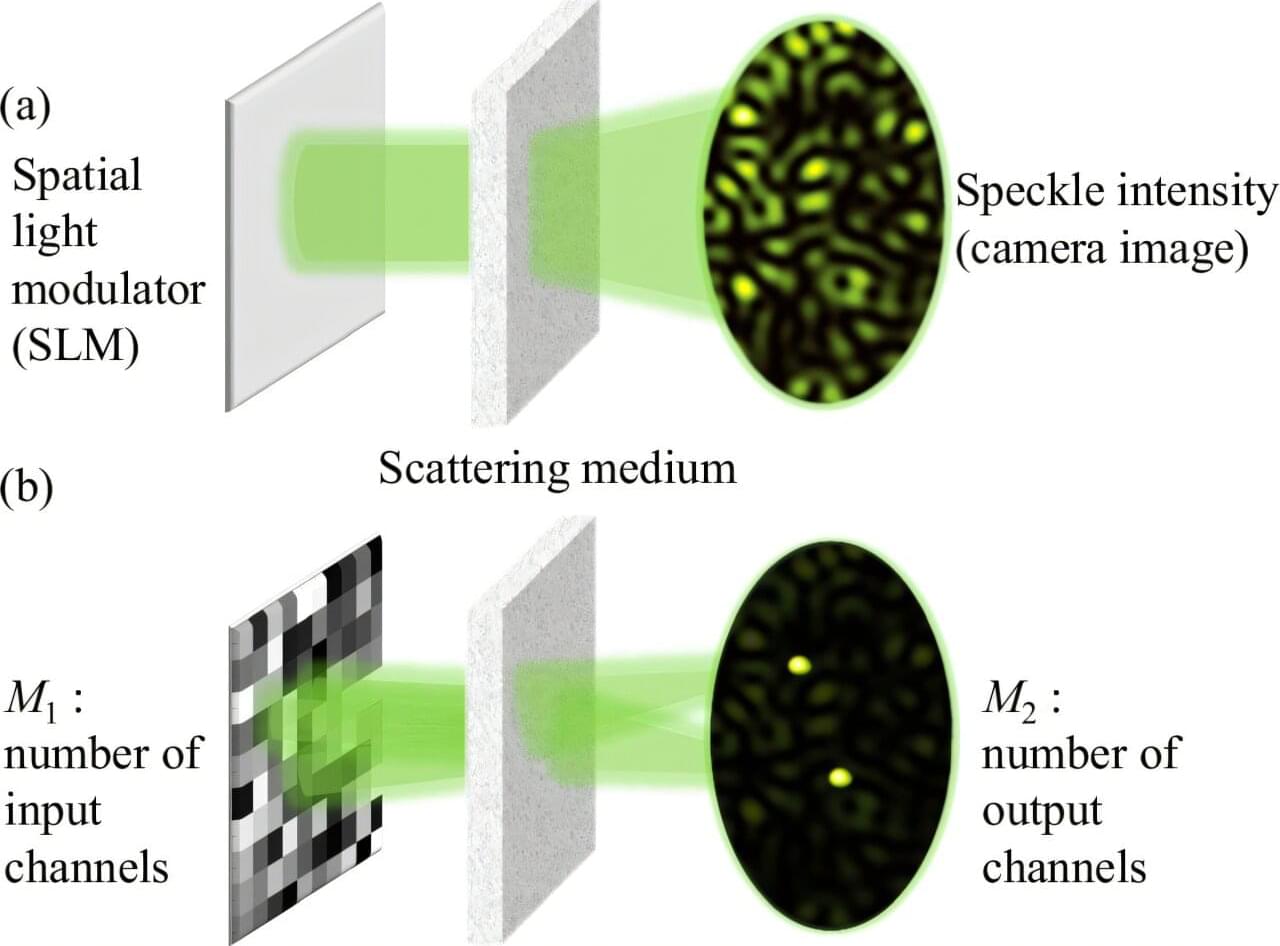
When light travels through a strongly scattering material, such as biological tissue or other disordered opaque media, it follows many different paths and produces a seemingly random speckle pattern. Wavefront shaping makes it possible to control this complex interference and focus light through such materials.
The success of this focusing process is commonly characterized by the enhancement factor—a measure of how much brighter the optimized focus becomes compared with the diffuse background. While reproducible enhancement is essential for applications, much less attention has been paid to how the enhancement factor fluctuates from one realization or target position to another.