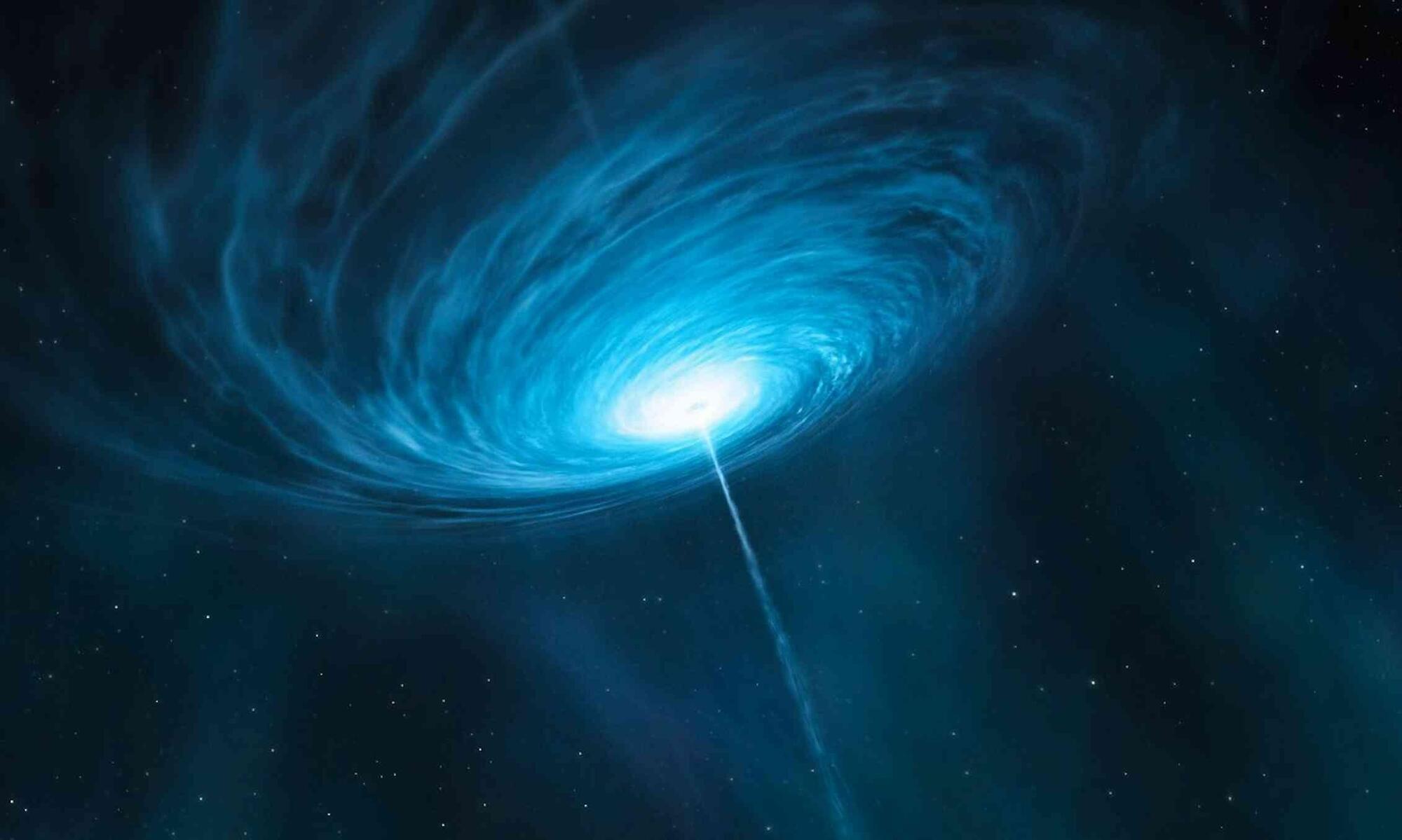
Neutrinos are funny little particles that weigh almost nothing, making them one of the universe’s most elusive building blocks. They can come from objects as mundane as bananas and as exotic as supernovas —the exploding death throes of massive stars. Most neutrinos stream through space and pass through the Earth without interacting with anything.
An experiment called IceCube, built to detect these “ghost particles” emitted from astrophysical events, just won a Nobel Prize. As a physicist, I’m interested in figuring out where the neutrinos IceCube detects come from. A study that my colleagues and I published in October 2026 suggests that we could potentially use radio telescopes to answer this question. The study is published in The Open Journal of Astrophysics.
Even though these telescopes can’t see neutrinos, we can use their data to match up IceCube’s detections with their potential sources out in space. Knowing which types of objects produce neutrinos can tell astronomers about the physics occurring within those objects.