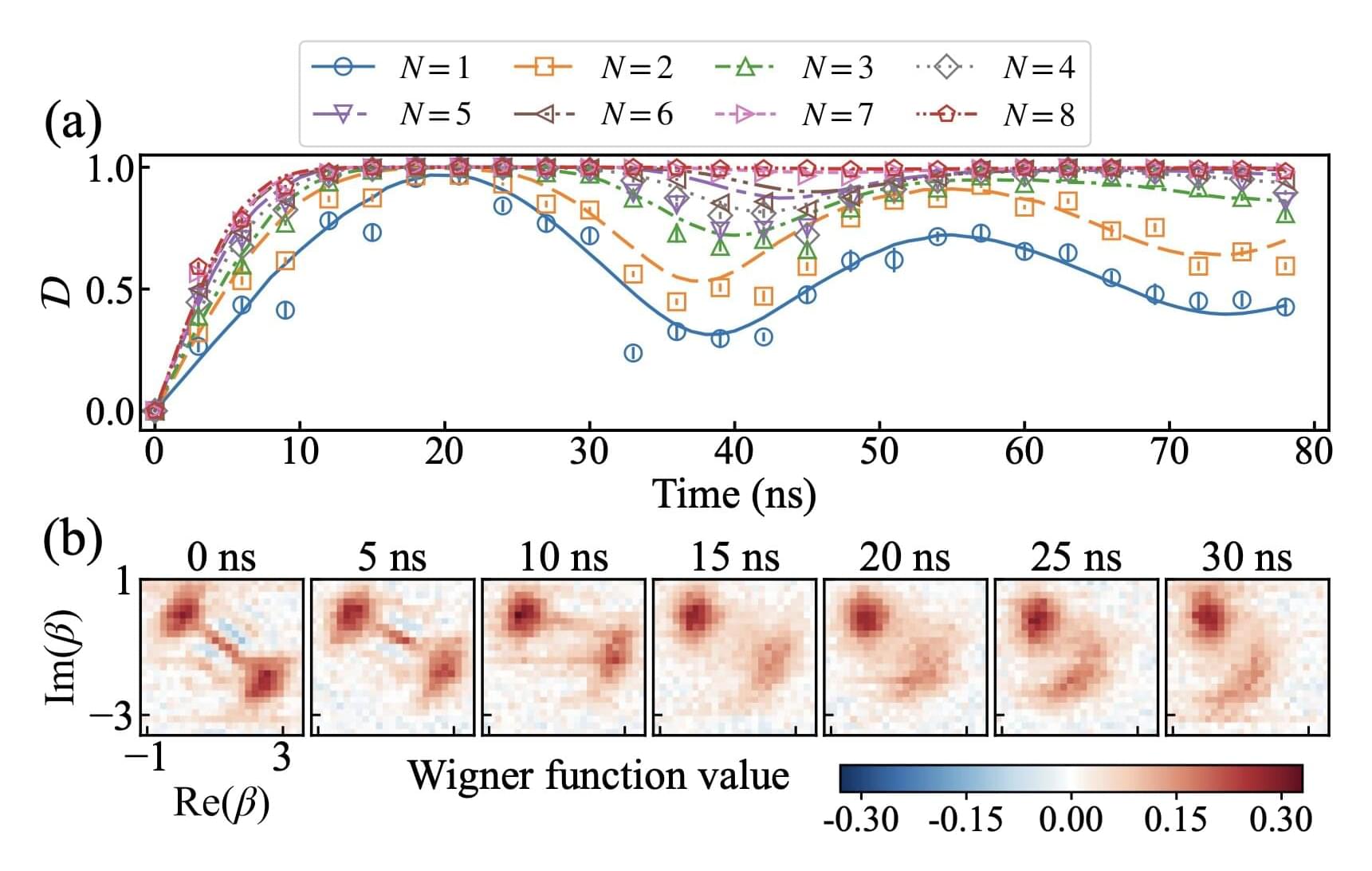
Quantum systems can occupy superpositions, quantum states that combine different possibilities. For instance, a microwave field can be prepared in a superposition of an empty state and a state that contains microwave light.
These two components can interfere, reinforcing or canceling each other’s contributions to the probabilities of measurement outcomes. This interference distinguishes a superposition from a situation in which the microwave field is simply empty or contains light.
A quantum system’s interactions with the surrounding environment can cause interference to fade, a process known as decoherence.