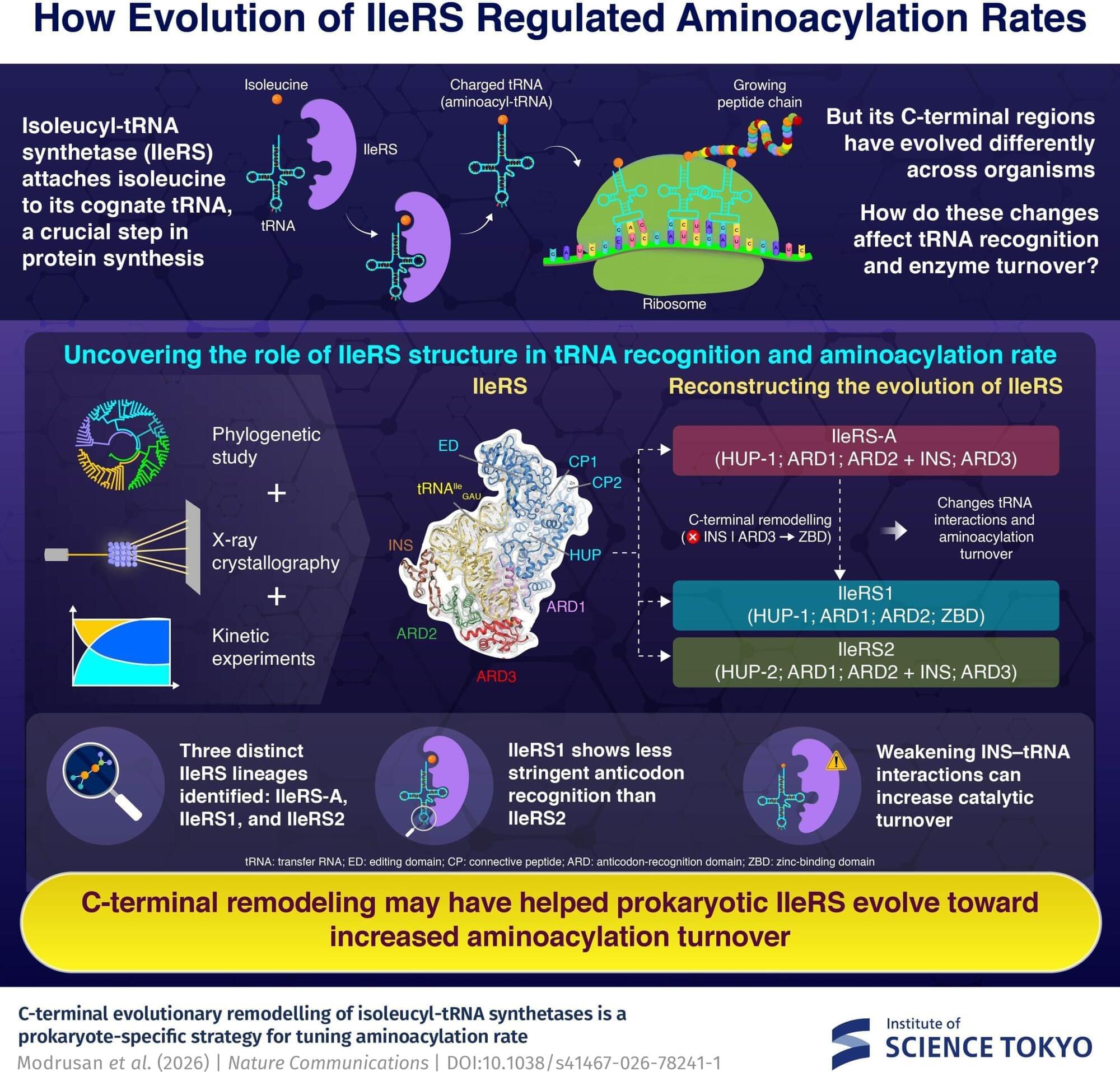
Evolutionary changes in a key protein synthesis enzyme, isoleucyl-tRNA synthetase (IleRS), may help bacteria fine-tune how quickly proteins are made, report researchers from Institute of Science Tokyo, Japan; the University of Zagreb Faculty of Science, Croatia; and ETH Zürich, Switzerland.
Researchers traced the enzyme’s evolutionary history and identified three distinct IleRS clades. Their findings show that C-terminal remodeling, including repeated loss of a structural region called “INS,” may have helped refine enzyme activity and reaction speed.
The study is published in the journal Nature Communications.