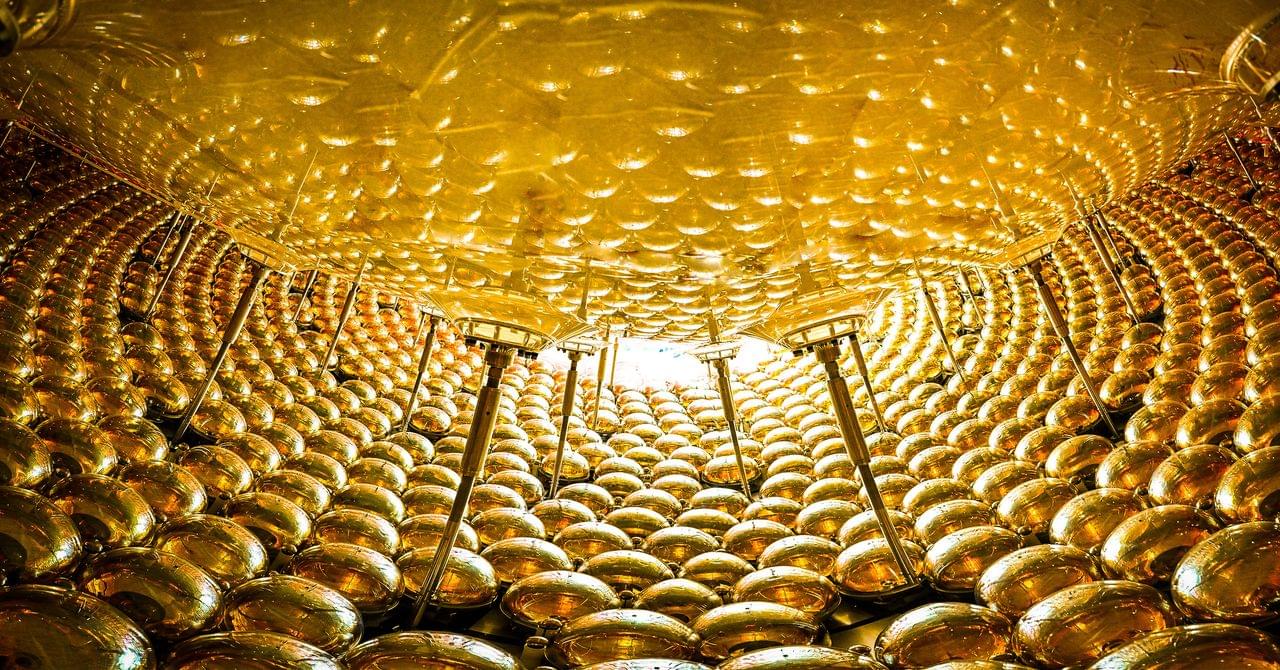
Scientists are using ultra-sensitive underground particle detectors around the world to track geoneutrinos—subatomic particles generated deep within the planet by the radioactive decay of elements like uranium and thorium. By detecting these “ghostly” particles, researchers are beginning to map and understand the radioactive heat engine driving Earth’s plate tectonics, mantle convection, and magnetic field.
* Deep Underground Observatories: To catch geoneutrinos, detectors must be shielded from background cosmic rays.
Experiments like SNO+ (located 2 km underground in Sudbury, Canada) and the JUNO experiment in China utilize thousands of tons of ultrapure liquid and light sensors buried deep in rock mines to capture the faint flashes of light produced when neutrinos hit the detectors.
* Probing Earth’s Hidden Heat: A significant portion of the heat driving Earth’s interior processes comes from radioactive decay within the crust and mantle. Because neutrinos pass through solid rock unhindered, geoneutrinos provide a direct line of sight into inaccessible regions thousands of kilometers below the surface.
* Building a Global Map: A growing network of underground detectors is gathering substantial new measurement data, helping geoscientists test and refine models of Earth’s mantle composition, thermal budget, and volatile internal dynamics.
1. What are Geoneutrinos?
Neutrinos are extremely lightweight, subatomic particles that rarely interact with ordinary matter. Geoneutrinos are specifically the electron antineutrinos produced when radioactive isotopes—primarily uranium, thorium, and potassium—decay deep within Earth’s crust and mantle.
2. Why Do Scientists Care About Them?
* An X-Ray for the Earth: Seismic waves tell us about the density and structure of rock layers, but they cannot tell us the chemical composition or heat output. Because neutrinos pass through thousands of miles of solid rock completely unhindered, detecting them gives a direct signature of radioactive elements below.
* The Engine of Plate Tectonics: Radioactive decay powers much of Earth’s internal heat engine. Measuring geoneutrinos helps geoscientists calculate how much heat comes from radioisotopes vs. residual heat left over from Earth’s formation, resolving a long-standing question about what drives mantle convection and continental drift.
3. How Are They Detected?
Detecting them requires massive scale and isolation:
* Extreme Depth: Experiments like SNO+ in Canada or JUNO in China are built up to 2 kilometers underground in active or former mines to block out cosmic rays.
* Liquid Scintillators: Giant acrylic or stainless-steel spheres are filled with thousands of tons of oily liquid that emit tiny flashes of light when hit by an incoming antineutrino. Thousands of light sensors (PMTs) surrounding the vessel record these flashes.
#geoneutrino #neutrinos #geophysics
A global network of detectors are reporting some of the most substantial measurements yet of neutrinos created deep underground by the radioactive elements that power our planet’s tectonic activity.