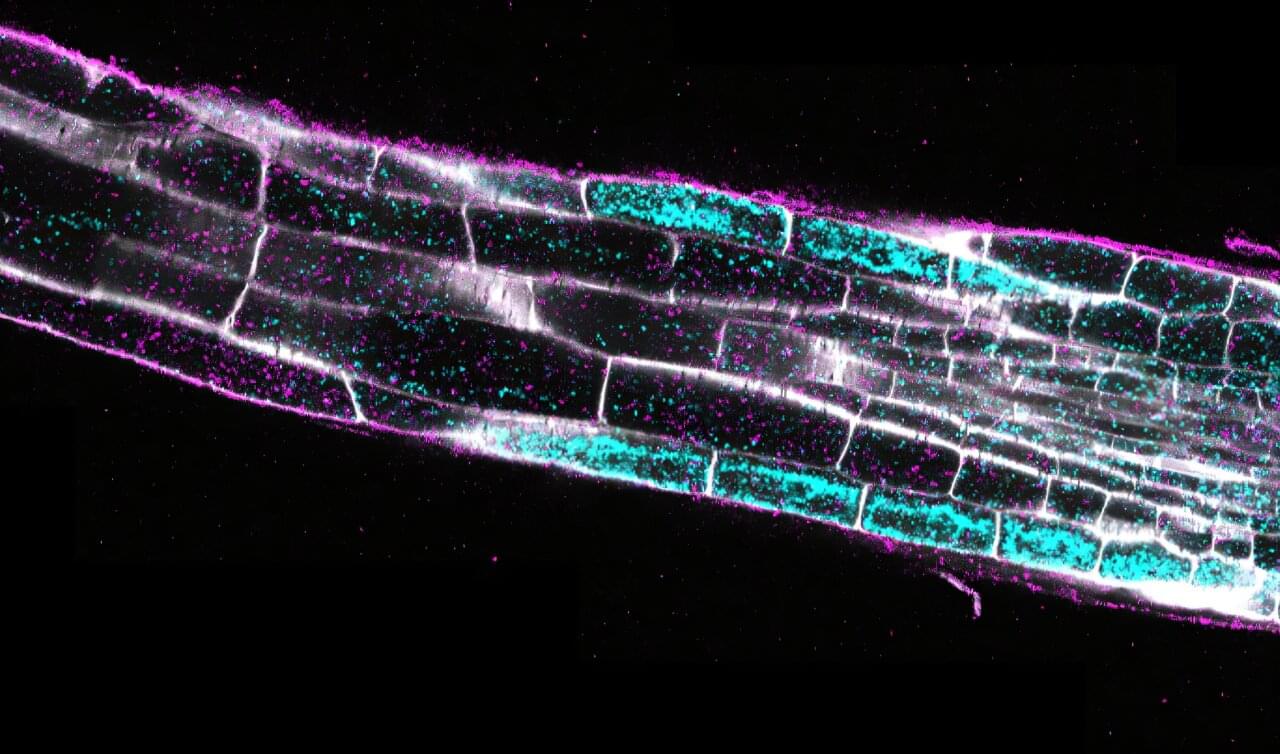
Scientists have discovered a hidden layer of identity in plant root cells: an “environmental mode” that switches on in some cells and becomes more common when water is scarce. The study, led by Dr. Marina Oliva and professor Ryan Lister, from the ARC Center of Excellence in Plants for Space and The University of Western Australia’s School of Molecular Sciences, examined how plant cells responded to drought conditions. The work is published in Nature
“Roots have long been described as a set of well-defined, distinct cell types, each following a single path from young cell to mature cell,” Oliva said.
Researchers read the gene activity of hundreds of thousands of individual cells from the root tip of the model plant Arabidopsis. They found that almost every cell type splits into two groups: cells that switch on a shared set of hundreds of genes involved in responding to environmental conditions and cells that do not switch these on.