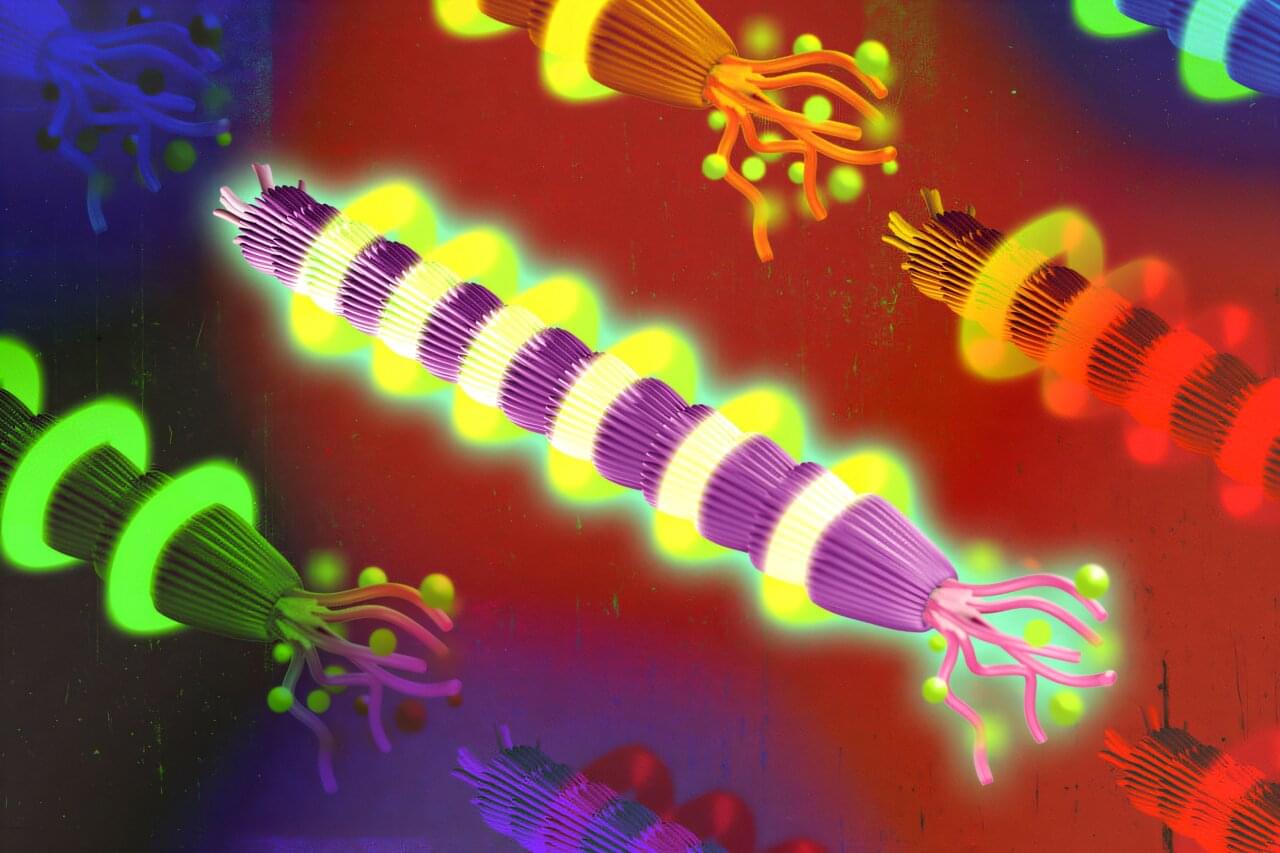
A nanoscale particle with a unique structure, developed at MIT, holds potential as a customizable delivery vehicle for personalized cancer vaccines. The backbone of the vaccine is a modified, harmless bacteriophage called M13, which forms a nanofiber that can be coated with cancer antigens. By precisely controlling the density of those cancer proteins, the researchers found that they could create a vaccine that prevents the development of colon tumors in mice.
This type of delivery particle could be adapted to carry many different antigens, allowing for the creation of personalized vaccines to treat individual patients’ tumors, the researchers say.
“The great thing about this is that it’s modular and we could switch out different antigens on demand, so you could design it to be patient-specific and target a known antigen for a particular kind of cancer,” says Angela Belcher, the James Mason Crafts Professor of Biological Engineering and Materials Science and Engineering and a member of the Koch Institute.