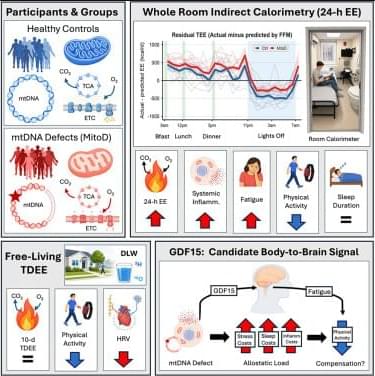
Shaulson and colleagues show that adults with mitochondrial defects expend more energy in a room calorimeter but maintain similar daily energy expenditure despite moving less in everyday life. Elevated plasma GDF15 tracks energetic burden, fatigue, and inactivity, suggesting that behavioral compensation may offset increased energy demands associated with mitochondrial defects.