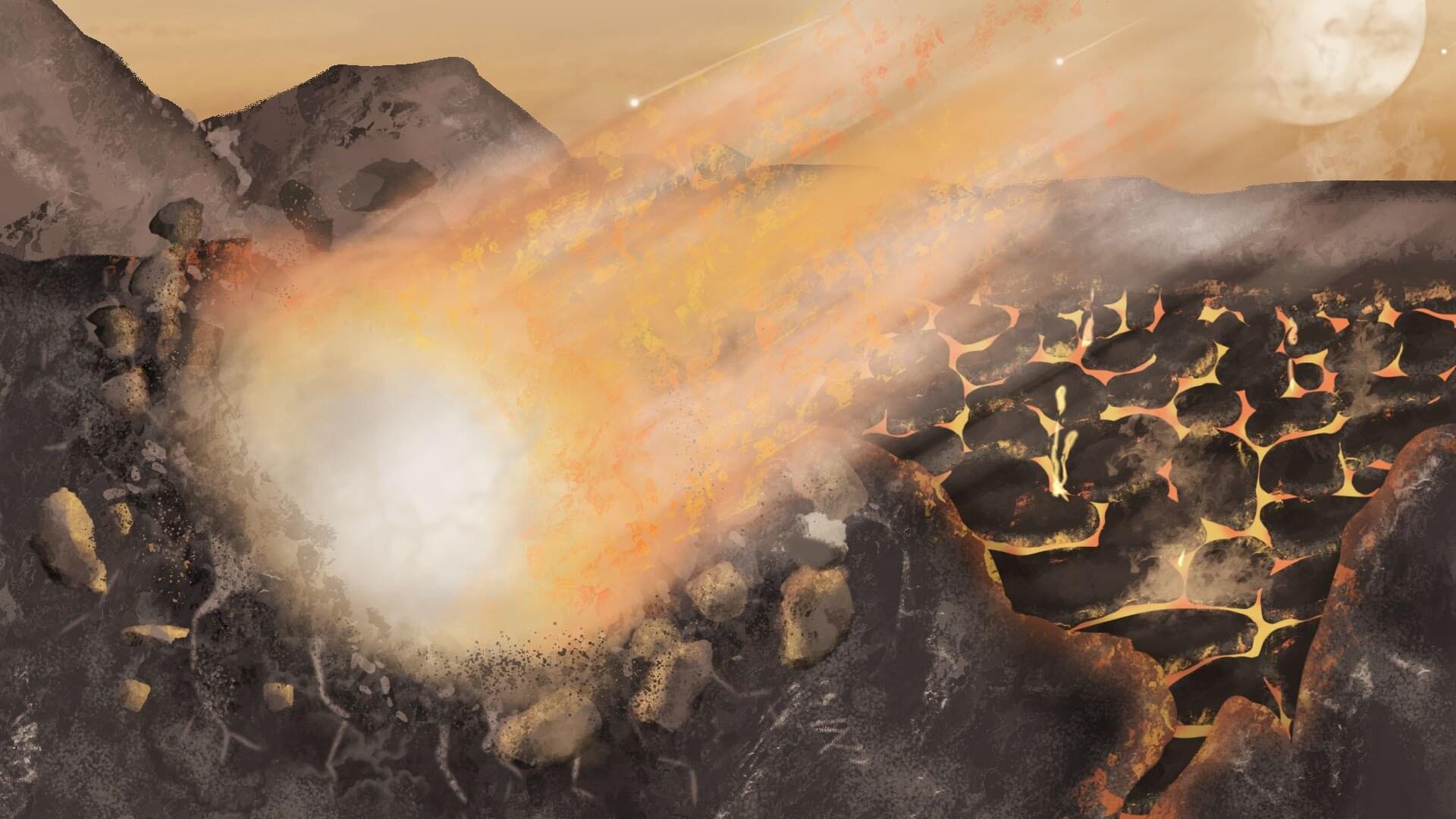
The theory that comets delivered the molecular building blocks for life on Earth is a long-standing one, since comets are known to carry many of these molecules. However, a new study challenges this idea.
The researchers, led by the University of Cambridge, found the cometary delivery of these building blocks would be—at best—a ‘one-off fluke,’ and not the steady rain of prebiotic molecules that had been theorized.
Using computer modeling, the researchers determined that comets travel too fast and at too sharp an angle to Earth’s atmosphere for the fragile organic molecules to survive: they would almost certainly vaporize on impact with the surface. However, the researchers also found that another planet in our system—Mars—could be a slightly more promising candidate for cometary delivery of prebiotic molecules, although this is still highly unlikely. The results are published in the journal Scientific Reports.