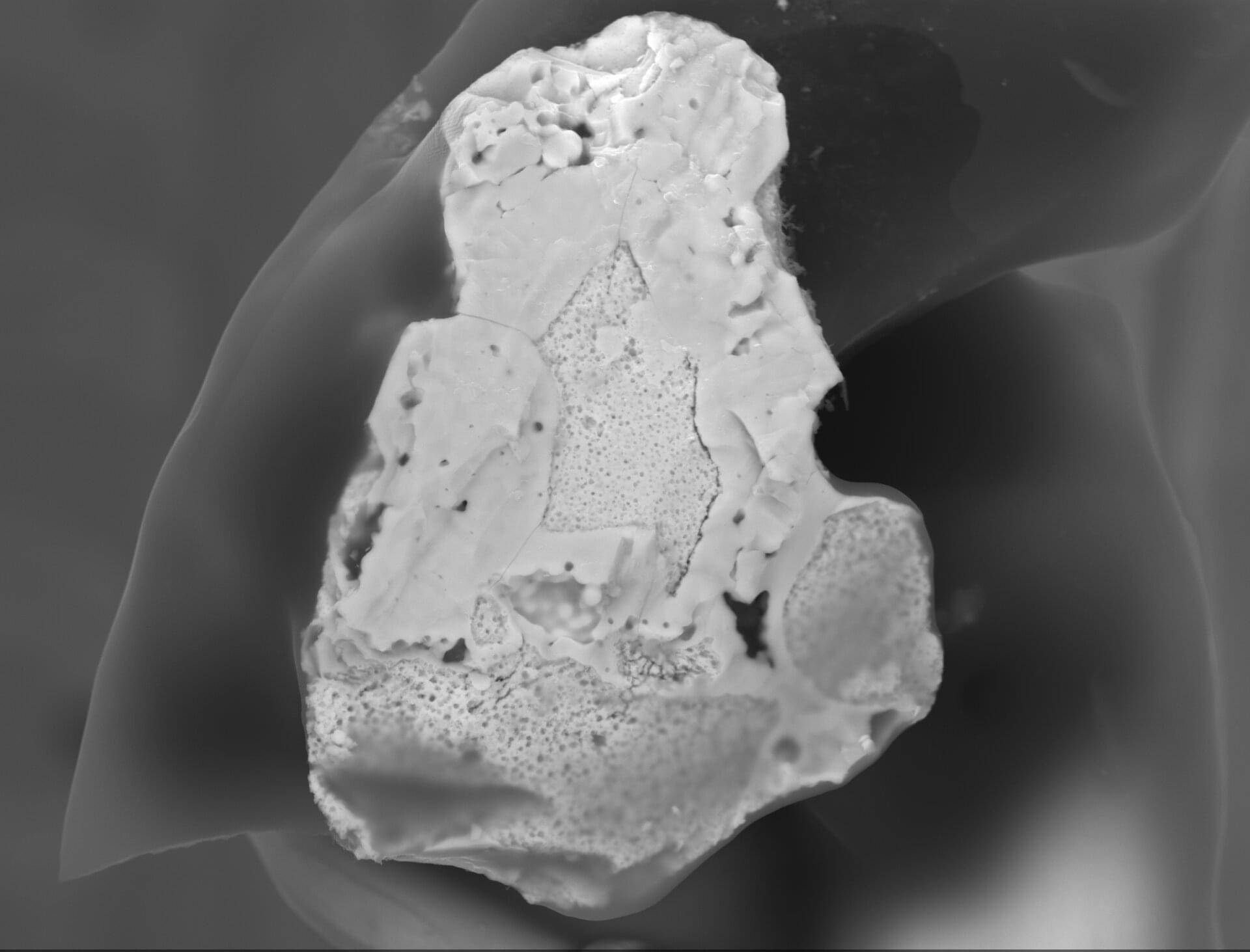
Four decades after the 1986 nuclear disaster, researchers at Leibniz University Hannover and the Helmholtz-Zentrum Dresden-Rossendorf (HZDR) examined six tiny, highly radioactive fragments that were released from the destroyed reactor in Ukraine in the wake of the incident. Analyses show that these “hot particles” are far more stable than had previously been assumed. The findings could allow for more precise assessments of the health risks posed by such radioactive particles. The paper is published in the Journal of Hazardous Materials.
The explosions hurled massive amounts of debris from the nuclear reactor, radioactive dust particles still contaminate the soil around the disaster area, known today as Chernobyl. Measuring only 8 to 50 micrometers, they remain highly radioactive even after 40 years. Even today, people may enter the affected areas only while wearing protective suits.
“There are three classes of these particles,” explains Tobias Weissenborn, a physicist and doctoral candidate at Leibniz University Hannover. “First, there are particles that are chemically and physically still very similar to the nuclear fuel uranium dioxide. Then, there are particles that are partially or fully encased in, or completely fused with, their zirconium layer.”