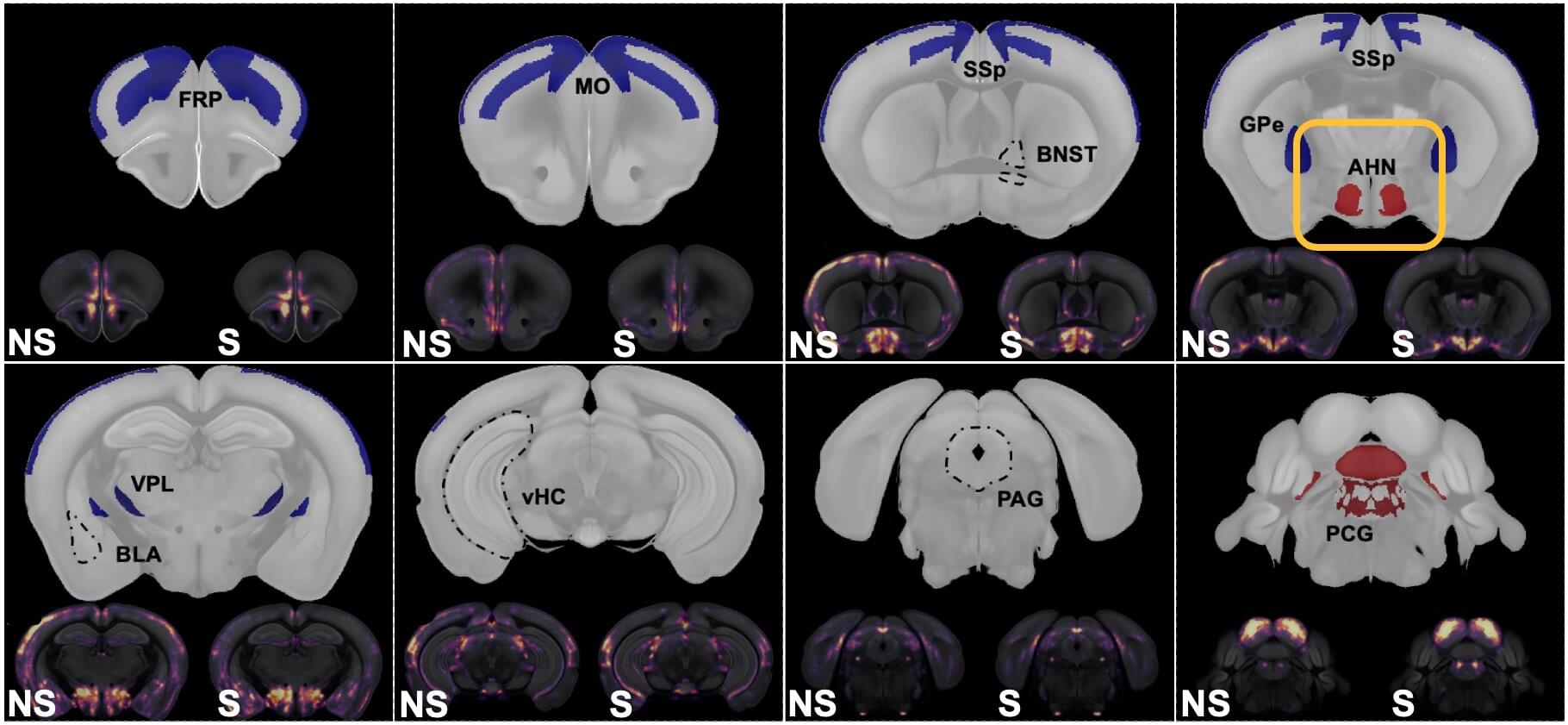
Researchers at the Icahn School of Medicine at Mount Sinai have identified a previously overlooked brain circuit that helps explain how prior adversity can make the brain more reactive to future stress.
The study, published Sept. 30 in Nature and conducted in mice, identifies a small, deep brain structure called the anterior hypothalamic nucleus (AHN) as a critical hub that scales the brain’s response to threatening events. The research team found that dialing its activity up or down directly altered how strongly the animals responded to stress.
“Why do some people develop debilitating mental health conditions in response to stress while others do not? One known risk factor for heightened stress sensitivity is a history of prior stress, such as early childhood adversity or adult traumatic stress. However, at a biological level, we still do not fully understand why this is the case,” says Zachary Pennington, Ph.D., lead author of the paper, who conducted the research as a postdoctoral fellow in the Cai Lab at Mount Sinai and is now an assistant professor of psychology and a member of the Djavad Mowafaghian Centre for Brain Health at the University of British Columbia.