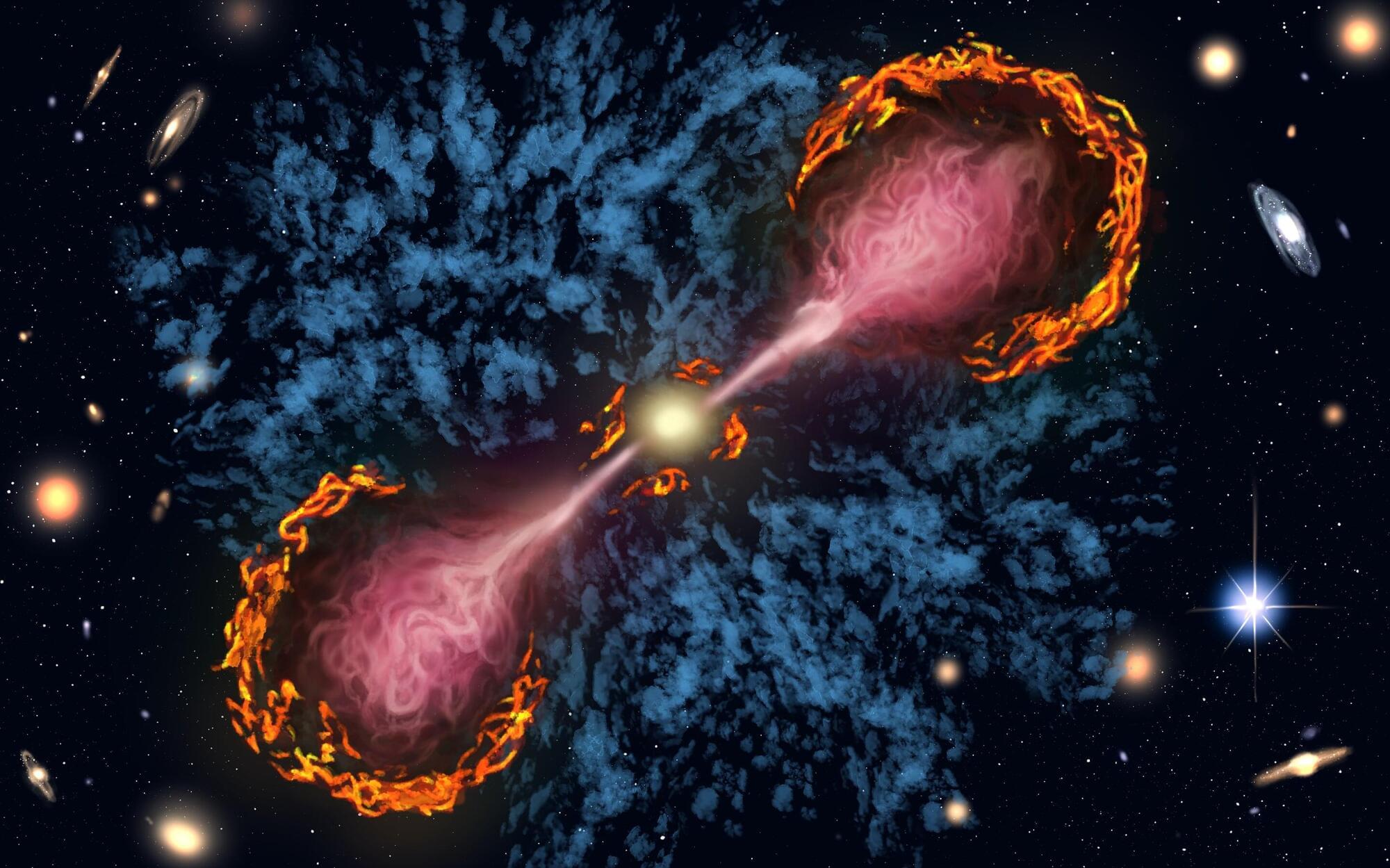
Galaxies are enormous and hold hundreds of billions of stars. These stars form from cold, dense gas. Every large galaxy, including the Milky Way, is wrapped in a huge envelope of gas called the circumgalactic medium, or CGM. This reservoir of raw material stretches 10–20 times the size of the visible portion of the galaxy.
The gas eventually cools, moves inward and clumps together to form stars. Thus, the CGM plays a key role in shaping stars, planets and even life within a galaxy.
But astronomers have long puzzled over why, given how much star-forming gas surrounds them, galaxies don’t have even more stars. What is keeping the fuel from cooling down and forming those stars?