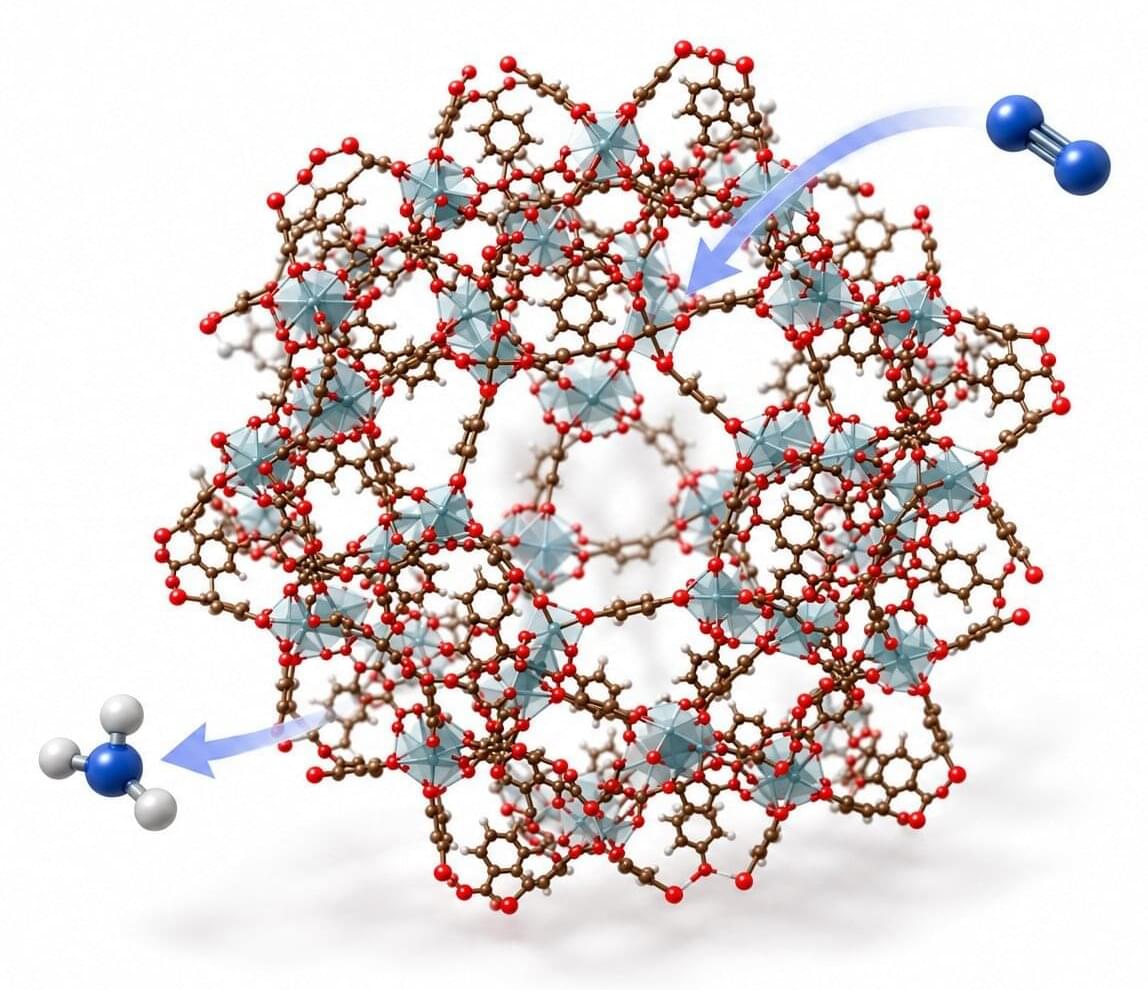
Two nearly identical materials have completely different chemical behavior. Research teams at the University of Vienna and TU Wien studied catalysts that use the energy of sunlight to produce ammonia. Surprisingly, when the three iron atoms that form tiny triangles in these catalysts are replaced by chromium atoms, the chemical reaction no longer takes place.
The teams have now explained why. Iron and chromium triangles have very different magnetic properties, and these magnetic properties also reveal whether the material works as a catalyst. The findings are published in the journal ACS Energy Letters.
Both research teams belong to the FWF Cluster of Excellence MECS (Materials for Energy Conversion and Storage), which develops new materials for the energy transition.