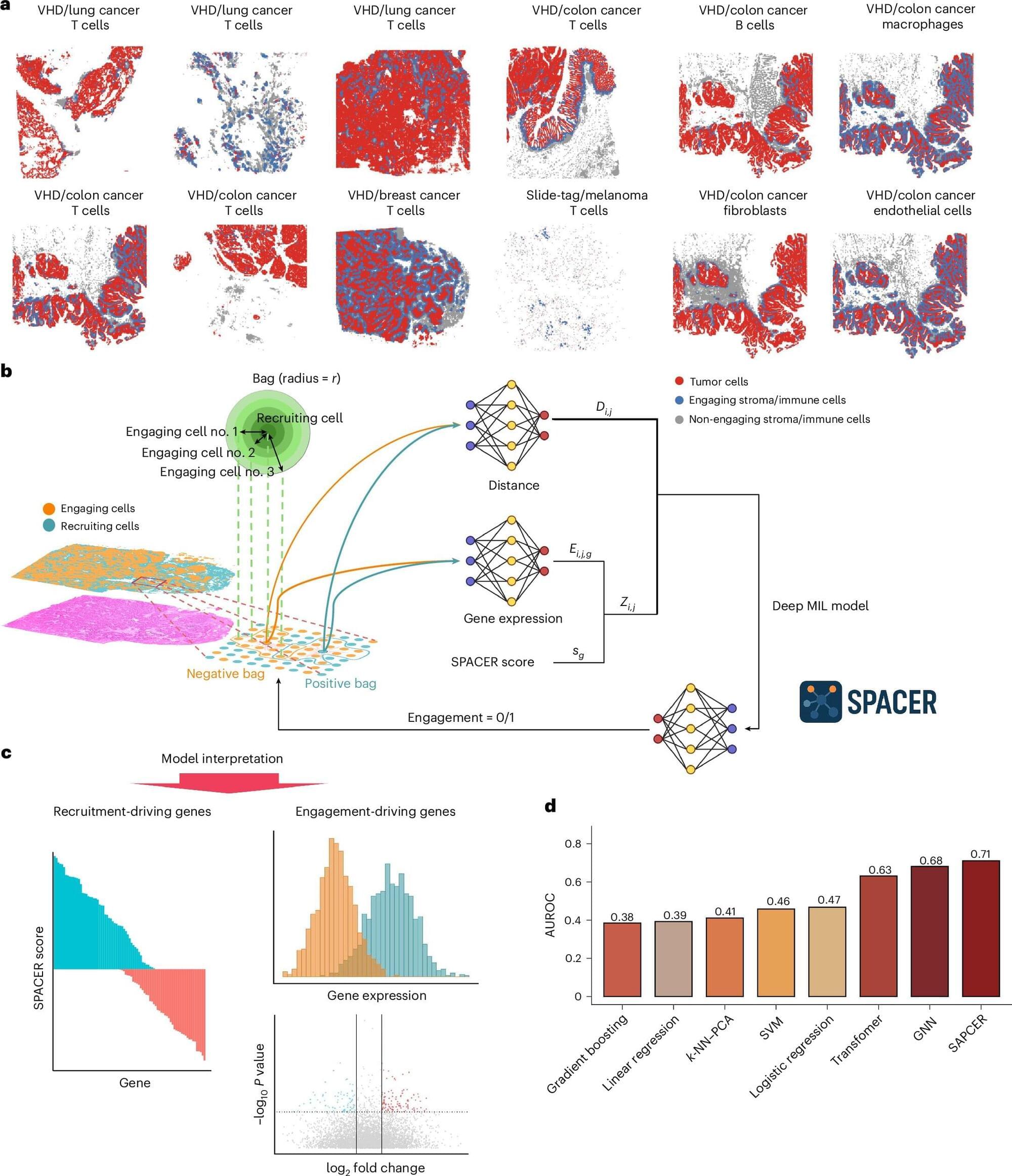
Researchers at The University of Texas MD Anderson Cancer Center and collaborating institutions in Texas developed an artificial intelligence (AI) model that helps explain how immune cells find their way to specific locations in the body and why they avoid others. The findings could help scientists better understand cancer, autoimmune diseases and treatment response.
The study, published in Nature Biomedical Engineering, was co-led by Tao Wang, Ph.D., associate professor of bioinformatics and computational biology, and Linghua Wang, M.D., Ph.D., professor of genomic medicine, executive director and head of the Center for Cellular Language Intelligence, associate member of the James P. Allison Institute and focus area co-lead with the Institute for Data Science in Oncology.
“While spatial technologies can show where immune cells are located, this new tool helps us investigate why they gather in certain areas and how they reach and recognize tumor cells,” Tao Wang said. “By identifying local signals that attract immune cells as well as potential barriers that may keep them out, we may be able to identify biomarkers and therapeutic targets that could be used to improve patient outcomes.”