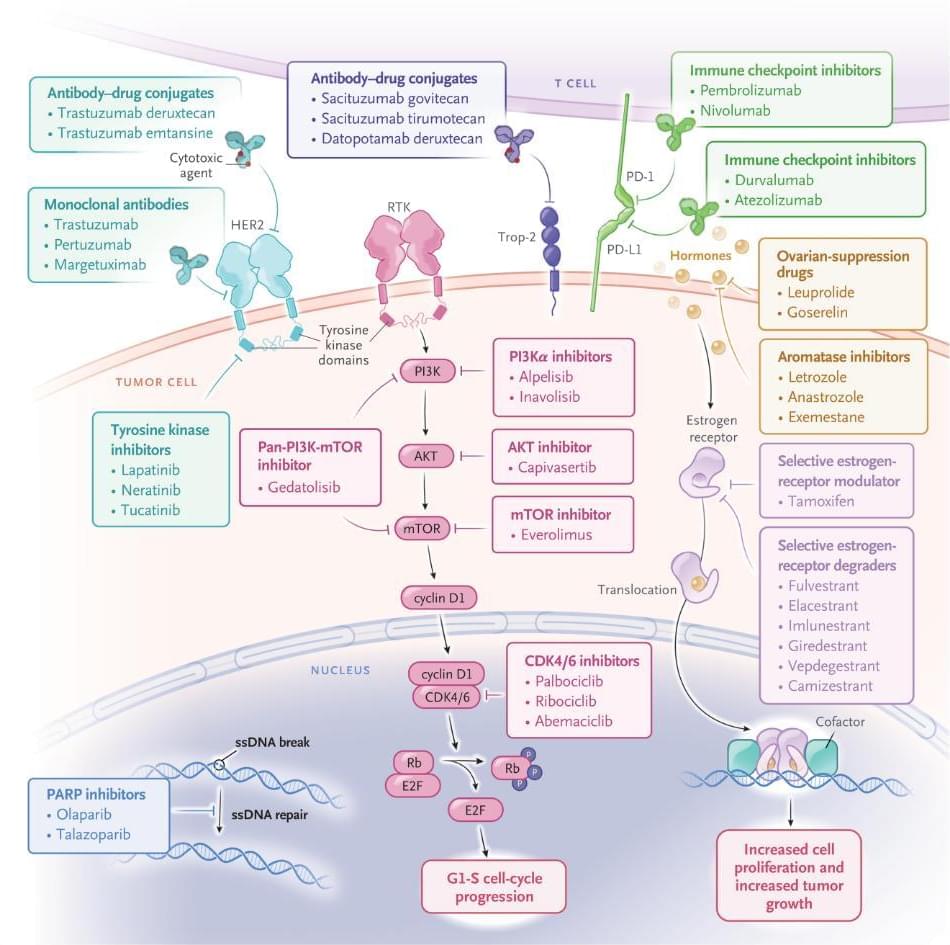
Systemic therapy for breast cancer has evolved rapidly since 2020, driven by the expansion of targeted therapies, antibody–drug conjugates, and immunotherapy across biologic subtypes. The integration of tumor molecular profiling and germline testing has enabled increasingly personalized, biomarker-guided treatment strategies. In hormone-receptor–positive, human epidermal growth factor receptor 2 (HER2)–negative disease, cyclin-dependent kinase 4 and 6 inhibitors remain foundational, whereas phosphatidylinositol 3-kinase pathway inhibitors, oral selective estrogen-receptor degraders, and antibody–drug conjugates have transformed disease management after endocrine resistance. In HER2-positive disease, antibody–drug conjugates — particularly trastuzumab deruxtecan — have improved outcomes and are being used in earlier lines of therapy, a development that is reshaping treatment paradigms.