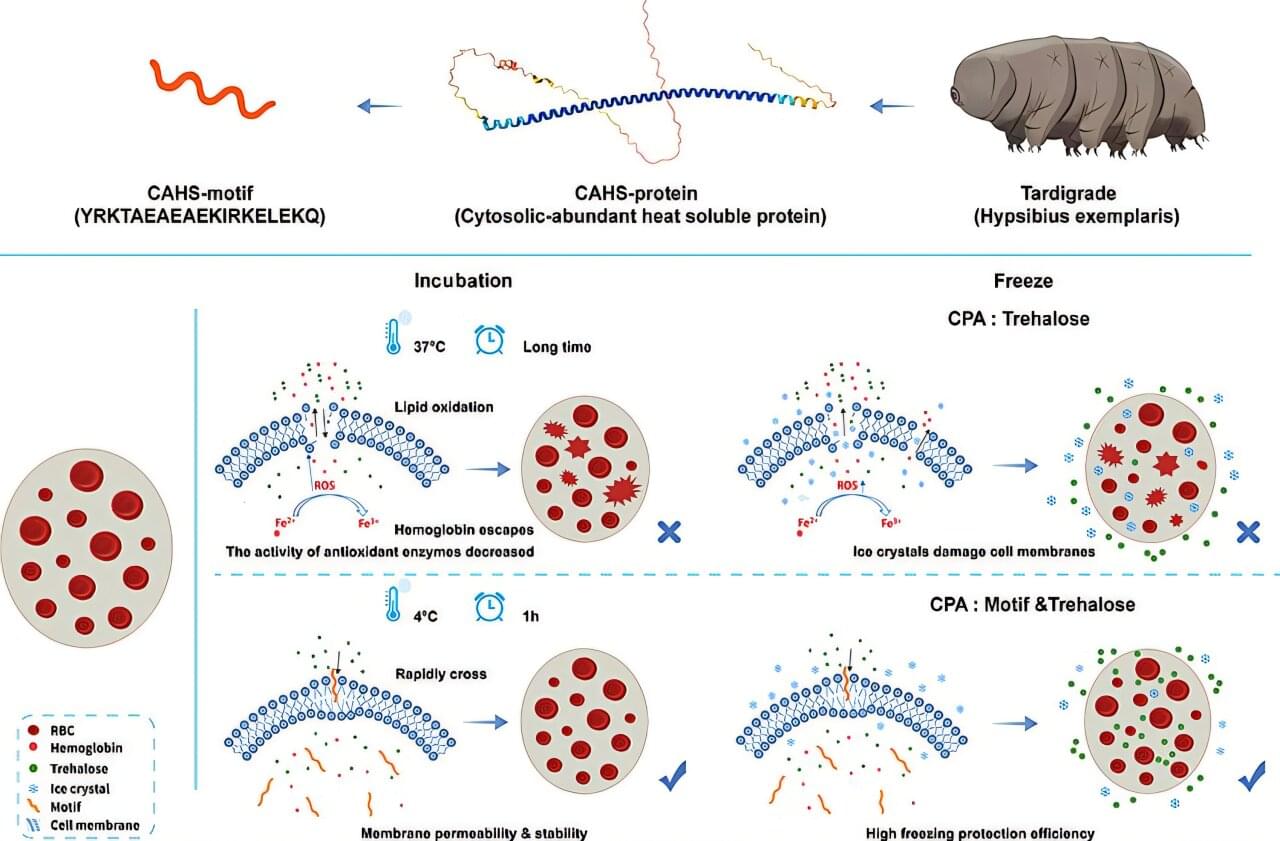
Tardigrades survive conditions that would destroy most other living things: freezing, dehydration and the vacuum of space. Researchers even put tiny tattoos on them, and the animals don’t seem to mind. By learning how these critters carry on, researchers hope to find ways to protect human cells.
One potential application is red blood cell cryopreservation—a process that stores rare blood types for long periods until they are needed. Blood cells are typically treated with glycerol to stop ice crystal formation during freezing. But glycerol must be removed before a transfusion, which causes cell damage.
Tardigrades offer a simpler option: They have a protein called CAHS (cytosolic abundant heat-soluble) that they use to survive in extreme conditions. These proteins uniquely interact with trehalose, a sugar that stabilizes cell membranes and proteins. It’s often used to reduce freezer burn in frozen foods. So, Hui Yang, Leming Sun and colleagues wanted to explore whether combining CAHS proteins and trehalose could protect red blood cells in mice better than glycerol could alone.