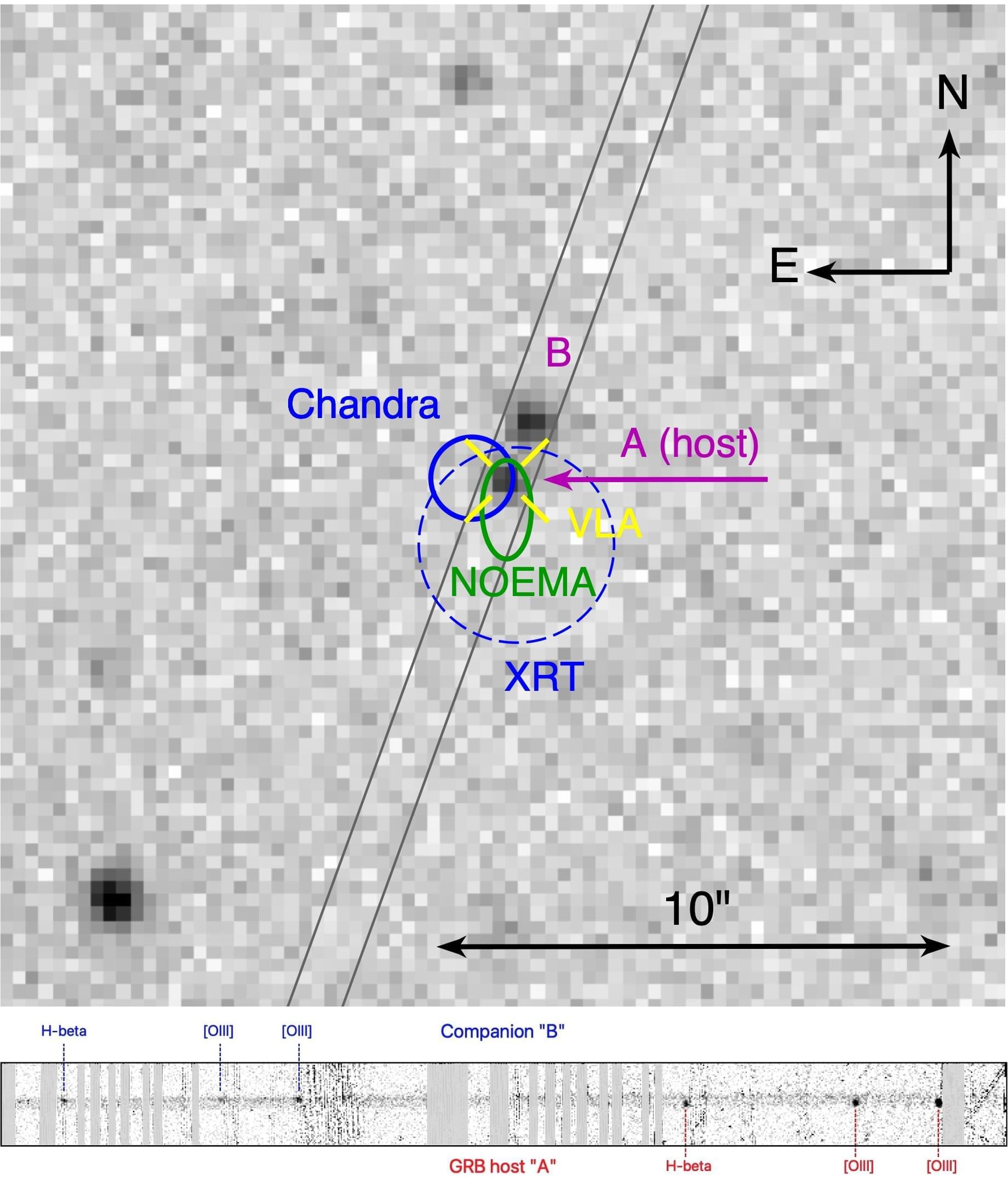
Astronomers have observed the longest-lasting central engine activity ever recorded from a gamma-ray burst. The burst occurred at a redshift of 0.8577, and the activity lasted about 27 days in the burst’s own rest frame—around 20 days longer than the previous record. The paper, posted to the arXiv preprint server on Sept. 18, explores different mechanisms that could be powering this puzzling burst.
Gamma-ray bursts (GRBs) are among the most energetic explosions in the universe, typically linked to the collapse of massive stars into black holes (producing long-duration GRBs, often with an accompanying supernova) or the merger of neutron stars (producing short-duration GRBs).
Ultra-long GRBs are a rare subclass of gamma-ray bursts in which the object driving or powering the explosion stays active longer than in typical bursts. Only a handful of confirmed examples exist, and their cause remains debated. Understanding what powers these rare ultra-long bursts helps explain how massive stars die and what kind of compact object is left behind.