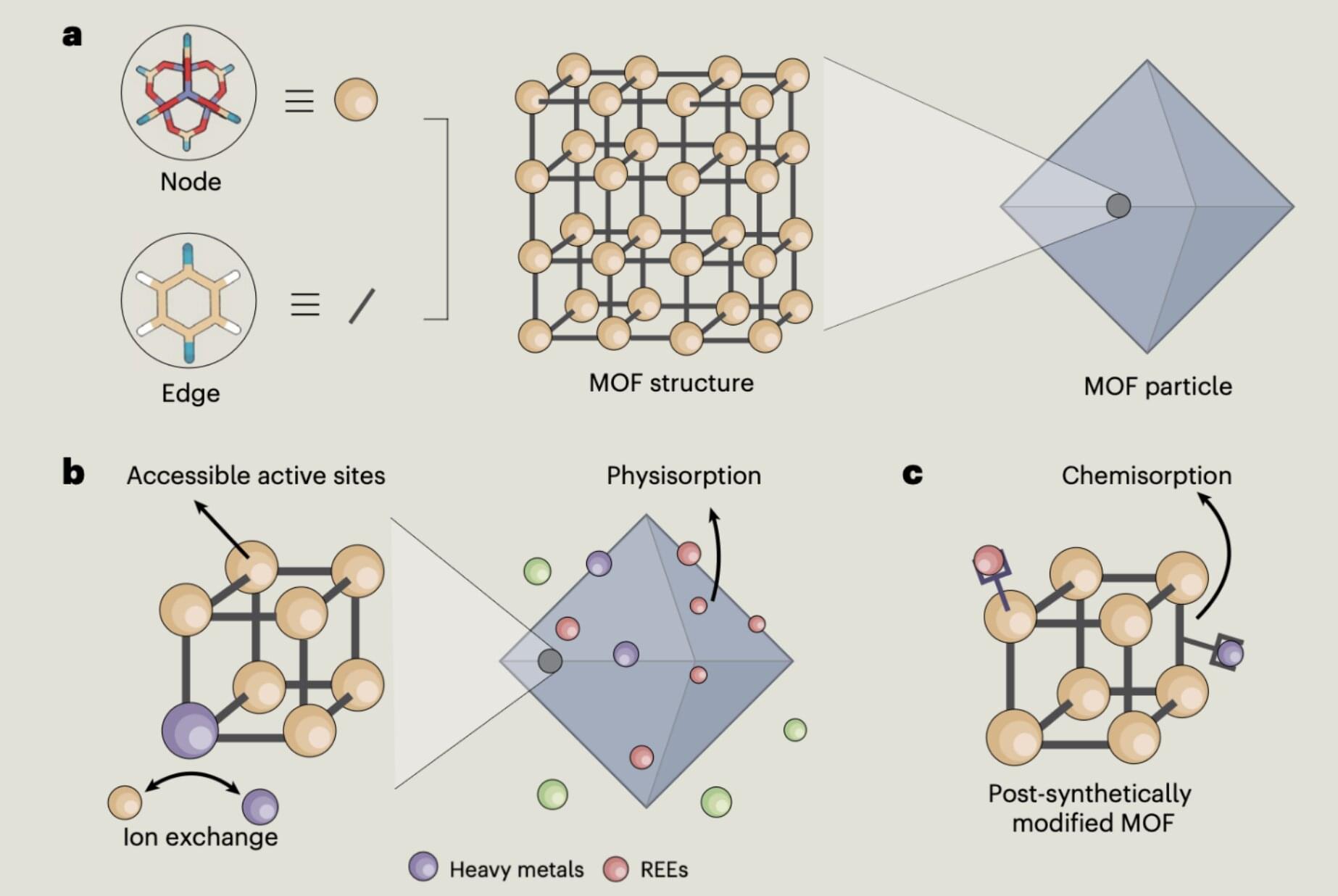
We generally throw away a broken camera lens, earphones or an old phone that has stopped working and is beyond repair because they seem useless when they no longer function. However, these objects contain rare earth elements (REEs) that have applications in magnets, superconductivity, optics and batteries, among others. When these objects end up in water, recovering REEs becomes difficult.
Industrial activities can also introduce toxic metals such as lead, cadmium, nickel and manganese into the same water. The challenge is no longer simply how to remove these unwanted, harmful metal pollutants from water, but also how to efficiently recover the valuable REEs.
What if a single strategy could help address both issues? To that end, researchers from the Indian Institute of Technology Gandhinagar (IITGN), the University of Cambridge and the University of Birmingham have developed a protocol using a class of highly porous materials called metal-organic frameworks (MOFs). These materials can efficiently capture toxic metals from water as well as recover valuable REEs from waste streams.