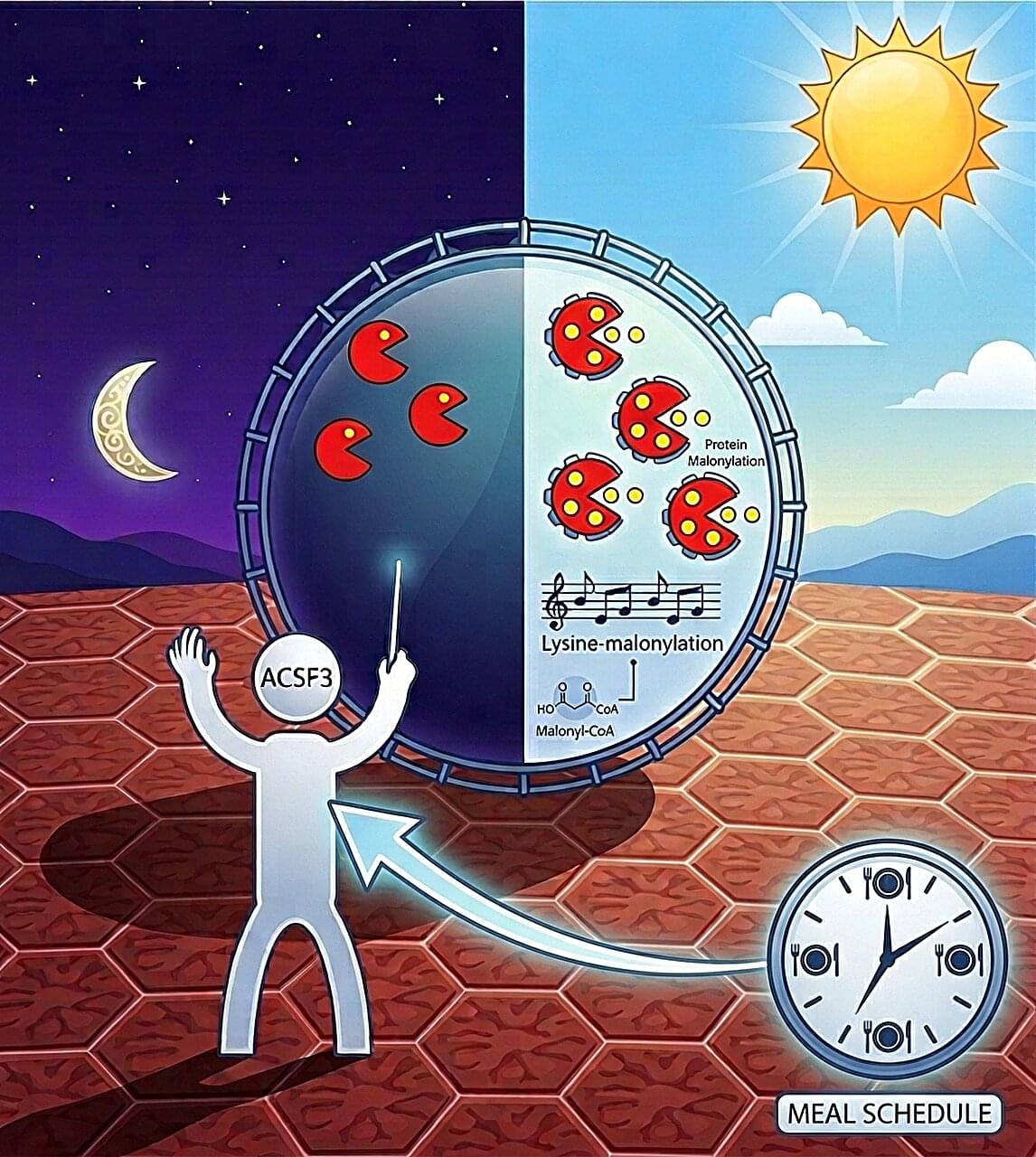
When we think about metabolism, we usually ask, “What did I eat? How much sugar, fat or protein was in the meal?” But through our research, we have become interested in another question: “When did I eat it?” This matters because metabolism does not work at the same pace throughout the day.
The liver, one of our main metabolic organs, follows daily rhythms that help coordinate how nutrients are processed, stored and used. These rhythms are controlled partly by the molecular circadian clock, present in virtually all body cells, but eating also provides an important signal.
In our recent study published in Cell Reports, we set out to understand how the timing of food intake influences these daily metabolic rhythms. What we found points to a mitochondrial enzyme, ACSF3, as a potential link between feeding time and the temporal organization of liver metabolism.