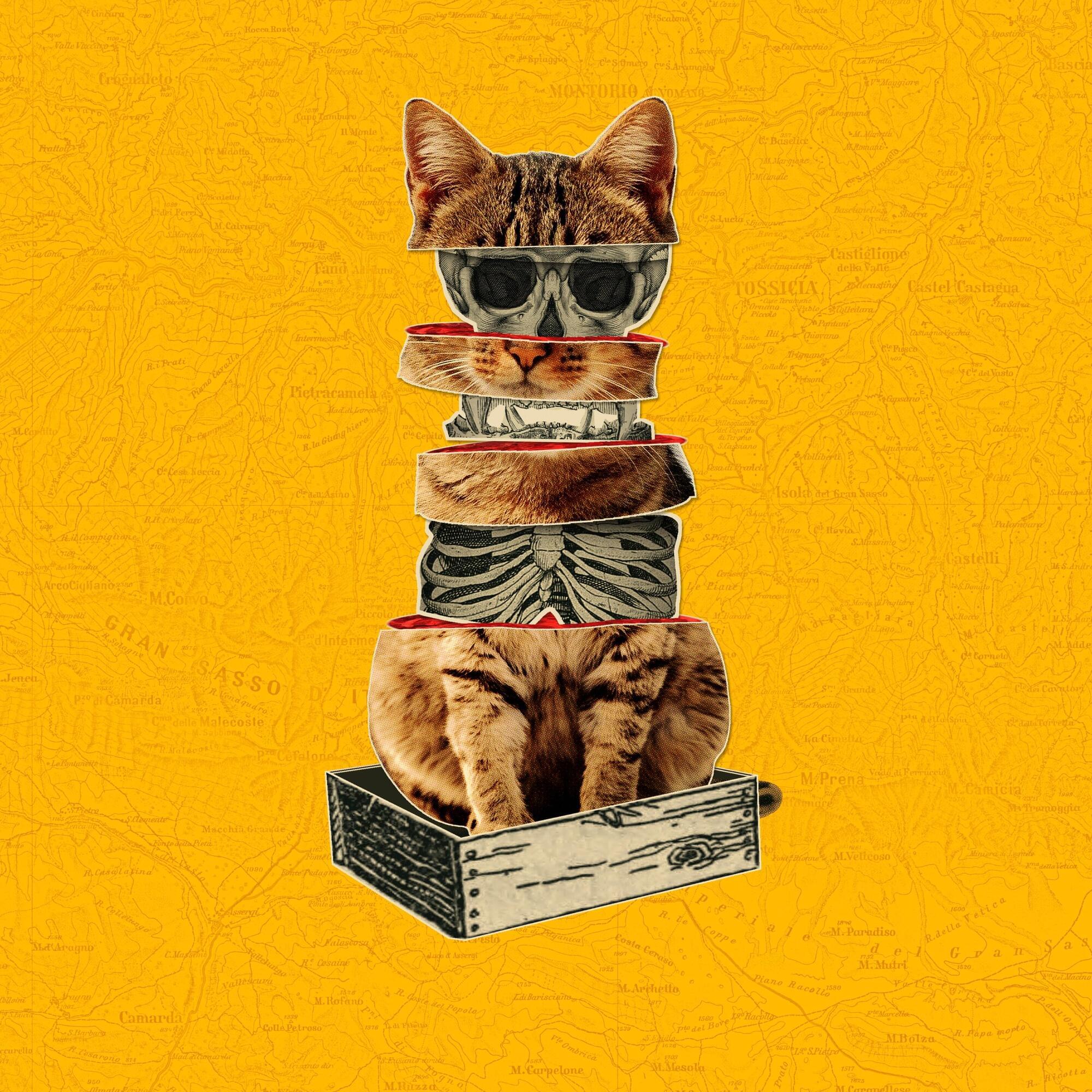
Somewhere between the microscopic realm of elementary particles and the macroscopic world of human beings, something strange happens: The rules of quantum physics, which work so exquisitely for tiny atoms, seem to lose their grip as objects grow larger. Pondering where and how this shift from small-scale quantum fuzziness to everyday sharp certainty happens gives rise to thought-experiment oddities like Schrödinger’s famous dead-and-alive cat. The process by which quantum phenomena like superposition—the paradoxical affliction of Schrödinger’s cat—fade into the classical reality we experience is known as decoherence.
Now, a new experiment has narrowed the field of possible explanations for decoherence, in particular ruling out a prominent theory linking gravity to the process. The results appeared in a paper in the New Journal of Physics in June 2026.
“One of the deepest questions in modern physics is why the strange quantum behavior that governs atoms and elementary particles seems to disappear in the macroscopic world we experience every day,” says FQxI member Catalina Curceanu, director of research and spokesperson for the VIP Collaboration at the National Laboratory of Frascati of the National Institute for Nuclear Physics (INFN-LNF) in Italy.