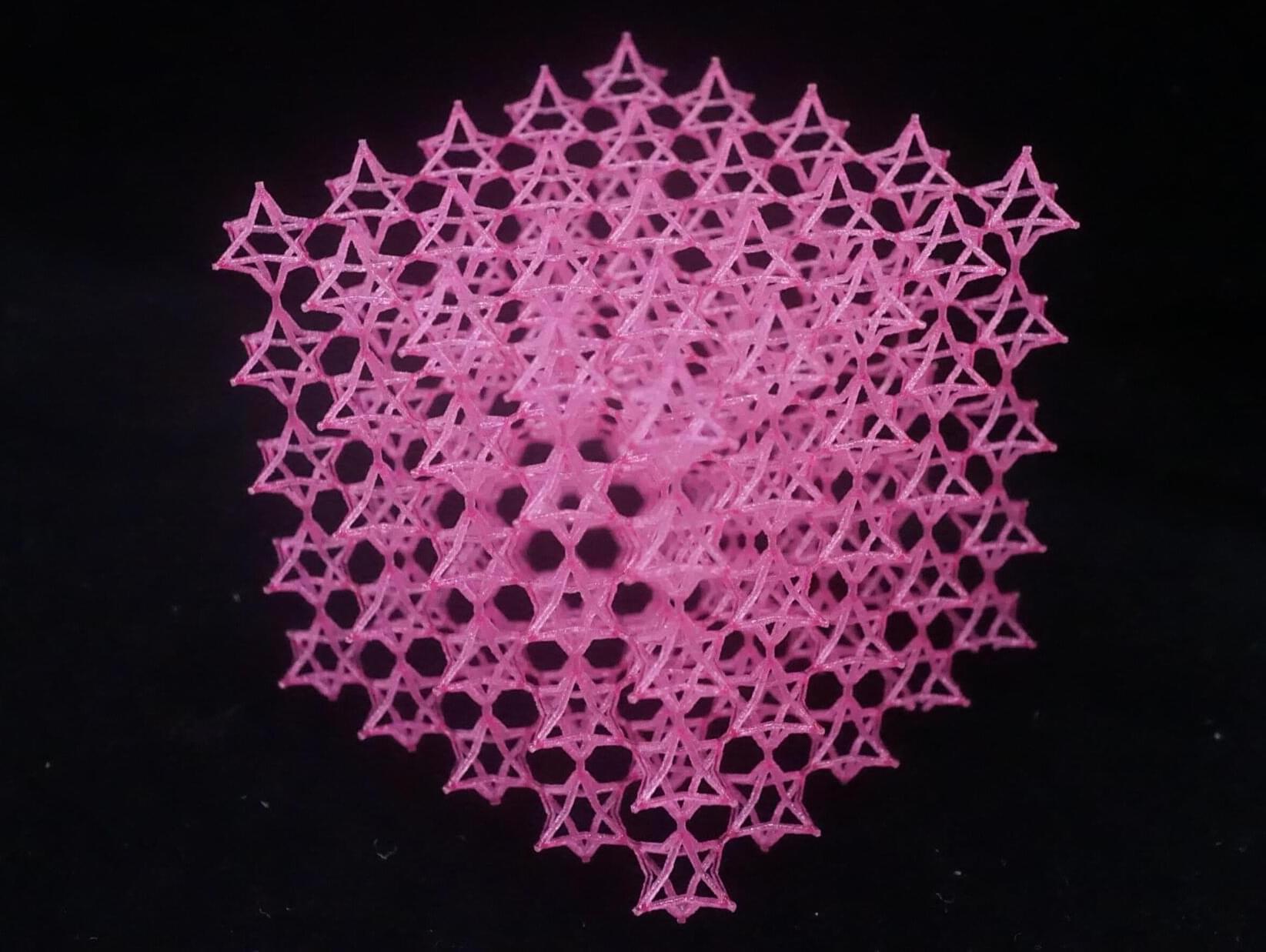
From repairing damaged tissues to developing better implants, many medical developments depend on materials that can mimic the complex properties of human tissue. Meta-biomaterials are among the most promising candidates. By tailoring their geometry, researchers can create materials with properties similar to those of natural tissues. But there is a catch: Changing one property often changes several others at the same time. TU Delft scientists have now developed a method to decouple these properties.
Their work, published in Nature Communications, helps researchers understand how individual material properties influence cell behavior and could accelerate the development of next-generation biomaterials.
Meta-biomaterials are engineered materials whose properties are determined not by their chemical composition but by their internal architecture. This allows researchers to design structures with carefully tuned mechanical, morphological and mass-transport properties. Such control is particularly valuable in biomedical engineering, where materials need to do more than simply replace damaged tissue. They must also interact with cells and actively support tissue regeneration.