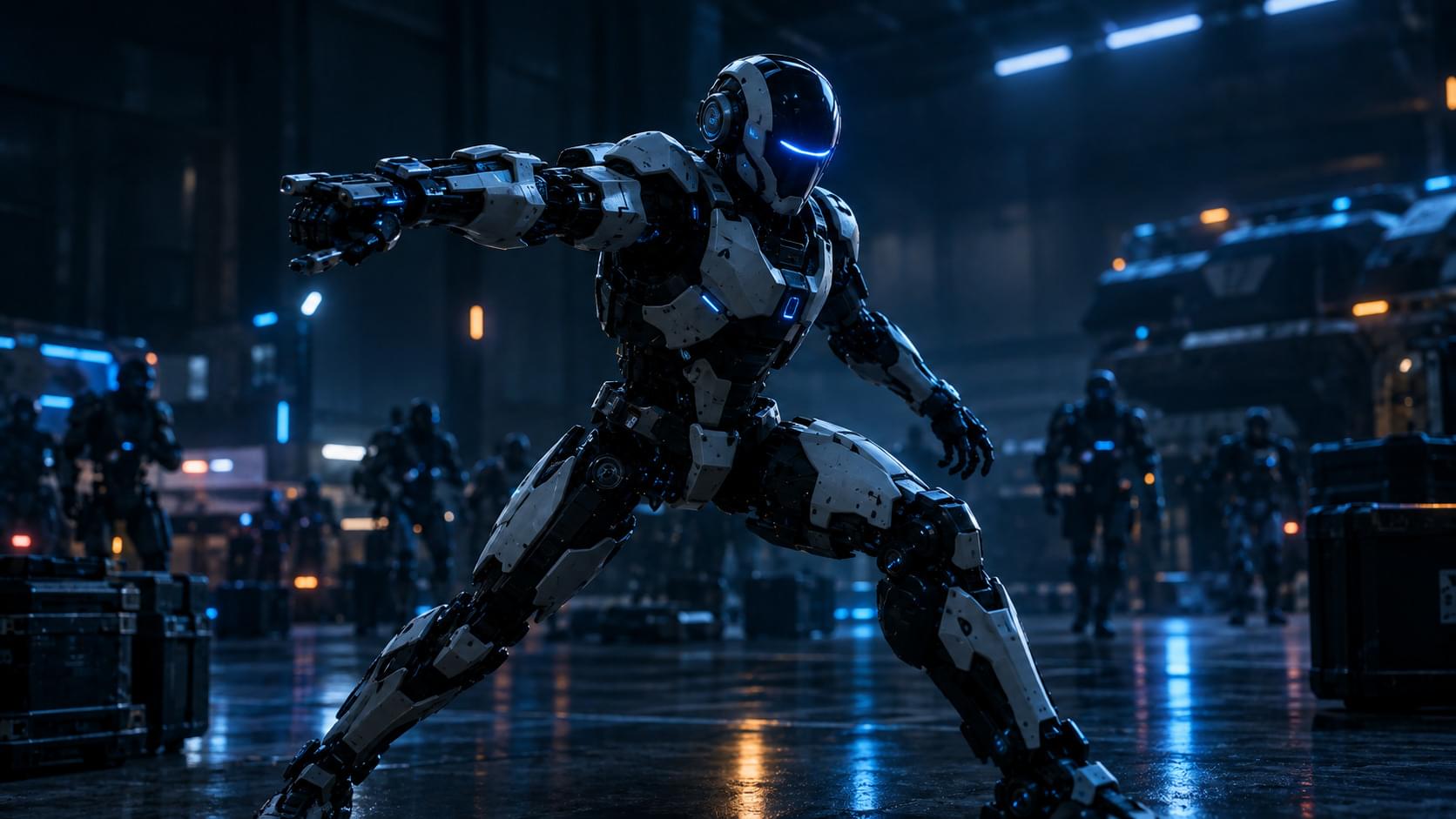
Unitree just achieved fully autonomous humanoid combat.
On September 7, 2026, Unitree demonstrated the world’s first fully autonomous humanoid robot combat — powered by its UnifoLM-X2-1.0 world-action model.
No human control. Real-time decision-making and dynamic adaptation.
This is more than a military spectacle. The same world-model technology that enables autonomous combat is exactly what industrial buyers need for robots that can handle unpredictable factory and warehouse environments.
Chinese manufacturers already dominate global humanoid shipments. This milestone shortens deployment timelines for practical industrial use.
Full analysis:
#HumanoidRobots #IndustrialRobotics #PhysicalAI
On September 7, 2026, Unitree achieved the world’s first fully autonomous humanoid robot combat, with its UnifoLM-X2-1.0 model demonstrating real-time decision-making and dynamic interaction without human control. The breakthrough validates that world-model-driven humanoids are ready for large-scale deployment. Two days earlier, China’s PLA Daily called for accelerating robotic “combatants” for military use, while Reuters identified over 100 Chinese military procurement notices, academic studies, and patents focused on battlefield humanoids. Unitree autonomous combat is no longer a lab experiment—it’s a live capability with immediate procurement implications for both industrial and defense buyers.
Unitree autonomous combat arrived on September 7, 2026, when the Chinese robotics company released video of its humanoid robot engaging in fully autonomous combat for the first time. The breakthrough is powered by UnifoLM-X2-1.0, a world-action model that shattered previous bottlenecks in instantaneous planning, decision-making, and dynamic interactive execution… The robot achieved high-dynamic, strongly interactive, real-time future prediction and planning—executing combat maneuvers without any human control.
The demonstration validates what the industry has been waiting for: Unitree autonomous combat proves that world-model-driven humanoids are ready for large-scale deployment. The question is no longer whether the technology works—it’s who deploys it first, and for what purpose.
I N S A N I T Y