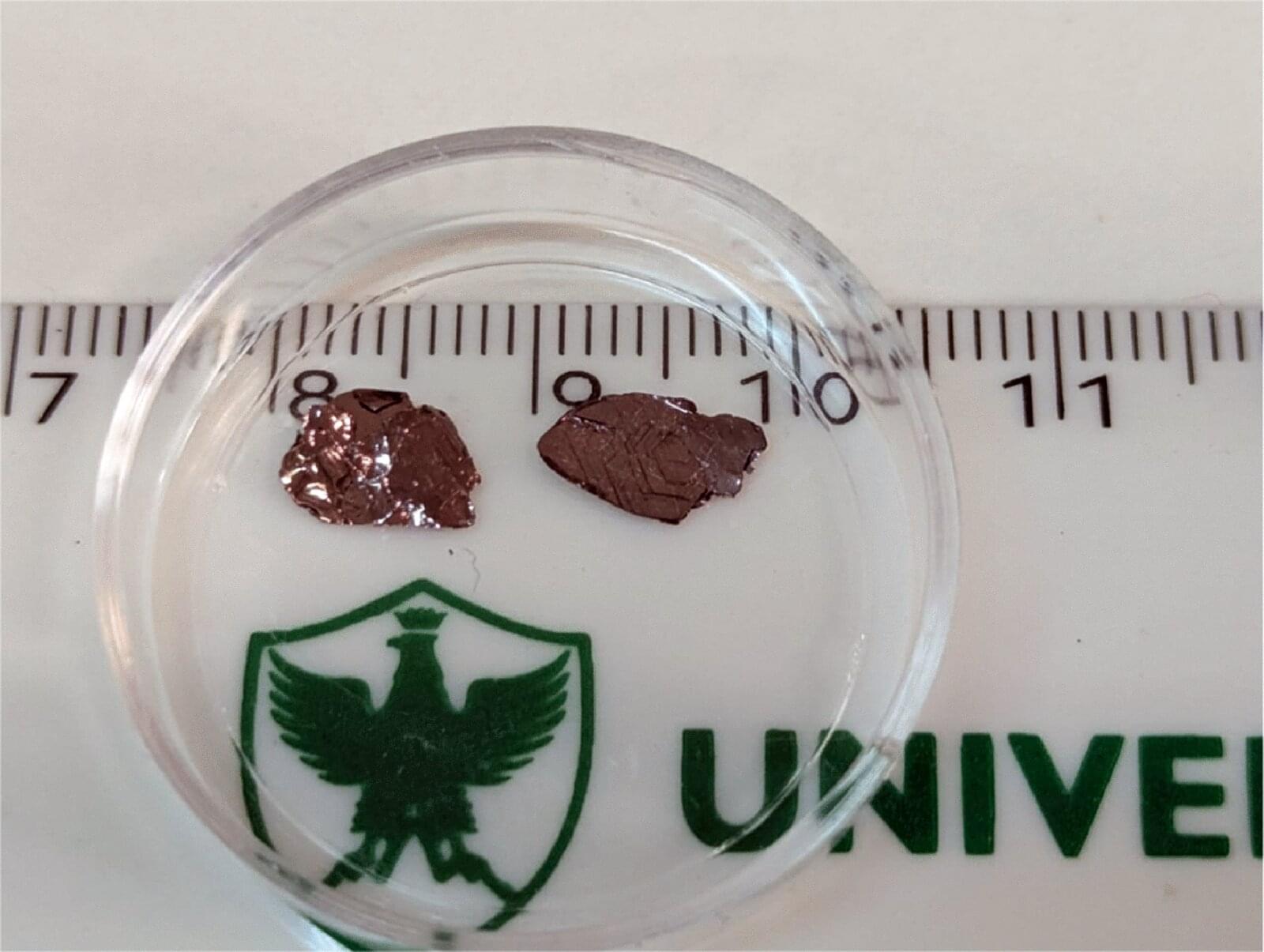
For decades, physicists have searched for dark matter, the invisible substance thought to make up roughly 85% of all matter in the universe. Although its gravitational influence shapes galaxies and the large-scale structure of the cosmos, dark matter has never been directly detected. Now, an international team has identified a new class of quantum materials that could dramatically improve the search for some of the lightest and most elusive forms of dark matter.
Published in Physical Review Letters, the study introduces three unconventional materials whose unique electronic properties could serve as exceptionally sensitive dark matter detectors, potentially surpassing existing detector designs by several orders of magnitude.
The research was conducted by Prof. Yonit Hochberg and Rotem Ovadia from the Hebrew University of Jerusalem, Dr. Dino Novko from the Institute of Physics in Croatia, and Prof. Antonio Politano of the University of L’Aquila. The work brings together expertise in particle physics, condensed matter physics and materials science to tackle one of the greatest unanswered questions in modern science.