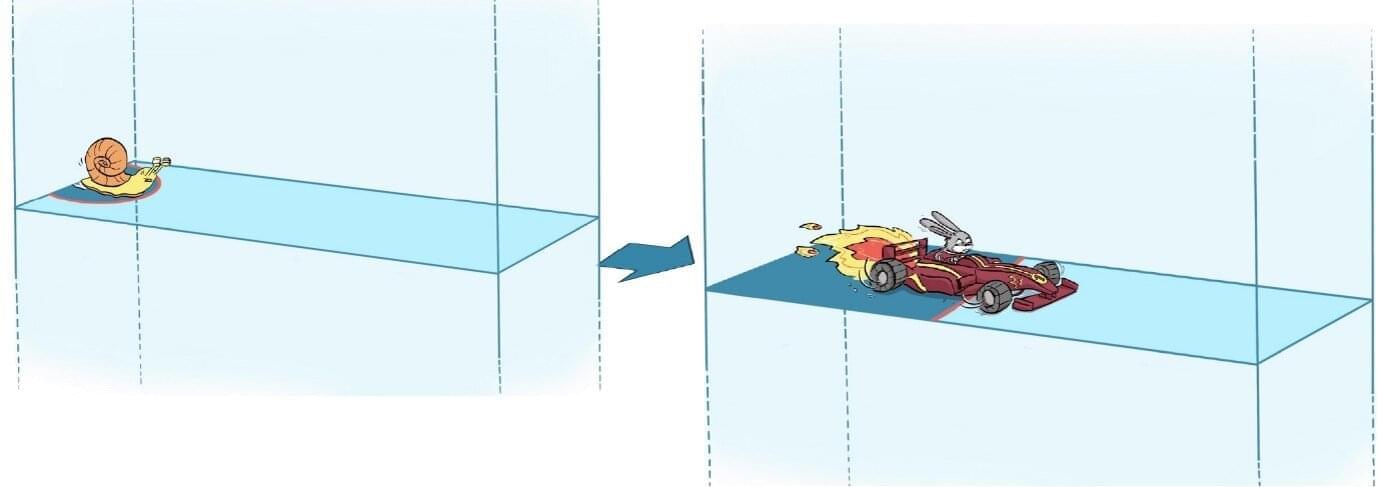
We have all seen something suddenly break: a phone screen cracks, a plastic object snaps or a piece of glass shatters. To our eyes, the failure seems to happen all at once. But what if the most important part of the break happens long before the final snap?
A new study presents a physical picture of how materials fail. The researchers found that cracks can begin as tiny, two-dimensional patches that grow extraordinarily slowly, at speeds ranging from microns to millimeters per second. Only after these patches grow to span the thickness of the material do they transform into the rapidly moving cracks associated with sudden, explosive fracture.
The research, published in the journal Physical Review Letters, was conducted by Yuval Paz and Jay Fineberg of the Racah Institute of Physics at The Hebrew University of Jerusalem, together with Meng Wang of the Beijing Institute of Technology and Mokhtar Adda-Bedia of CNRS, ENS de Lyon and Université de Lyon.