TianGong Ultra Beat Usain Bolt’s 100m Record — Then Admitted It Can’t Brake Safely.
China’s TianGong Ultra ran 100 meters in 8.64 seconds at the World Humanoid Robot Games (Usain Bolt’s record: 9.58s).
Impressive speed. Real sim-to-real transfer under competition pressure.
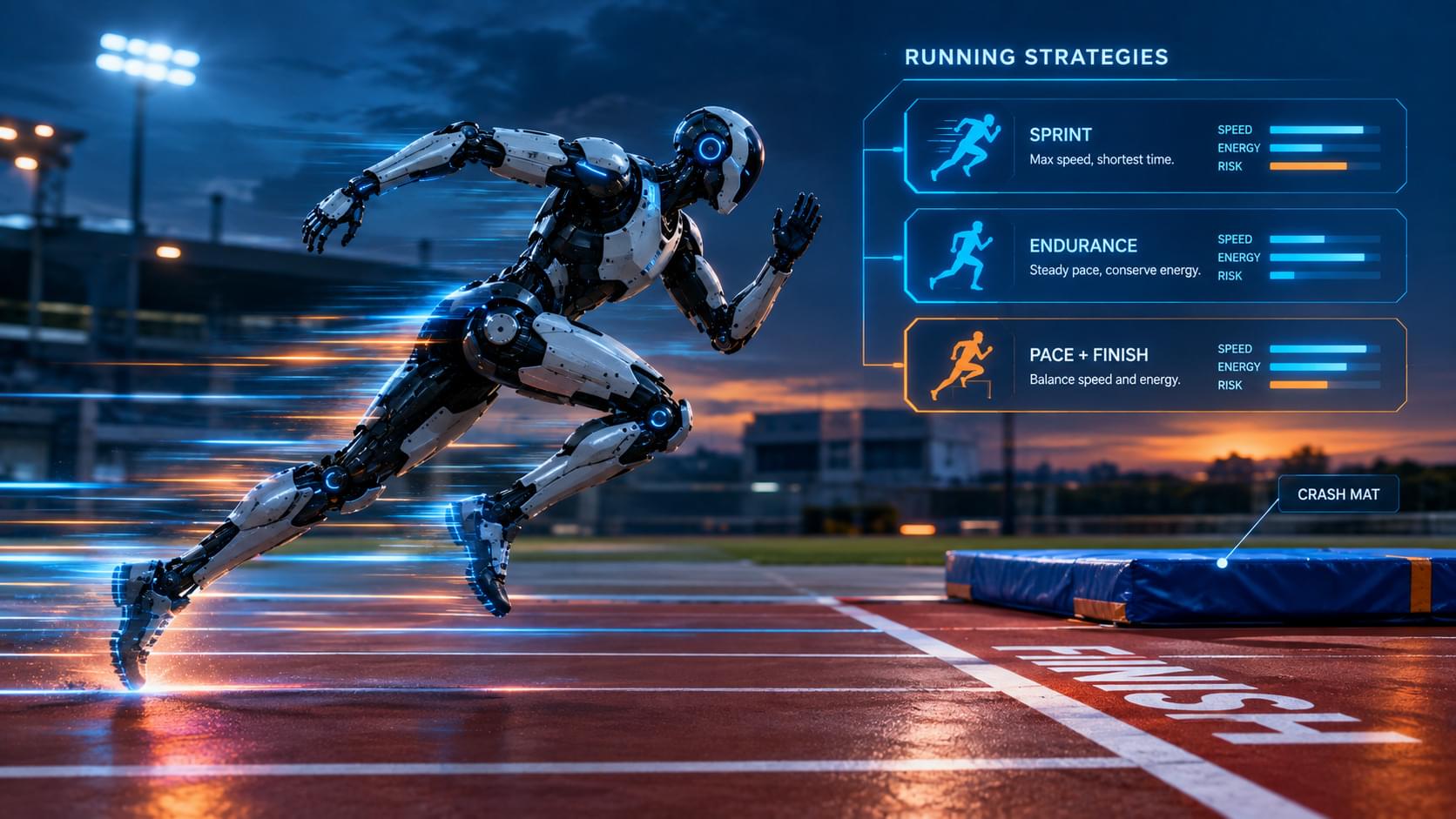
But the robot’s own lead engineer said braking remains unsolved. At 75 kg and speeds over 17 m/s, the robots used crash mats because safe stopping wasn’t ready yet.
This is a genuine technical achievement. It is not yet commercial readiness.
For anyone evaluating humanoids for industrial use: competition records are exciting, but the ability to stop safely at those speeds is the real question that matters.
Full analysis:
#HumanoidRobots #IndustrialRobotics #Robotics
TianGong Ultra ran a 100-meter sprint in 8.64 seconds at Beijing’s World Humanoid Robot Games, nearly a full second faster than Usain Bolt’s 9.58-second human record. The robot used three separately simulation-trained running strategies across its races. Its own lead engineer says braking remains unsolved: at 75 kilograms and speeds exceeding 17 meters per second, sprinting robots at the Games relied on a crash mat because stopping safely wasn’t yet possible.
TianGong Ultra just gave humanoid robotics its most viral headline of the year, and its own engineering team is the first to say the headline oversells where the technology actually stands. The robot, developed at the Beijing Humanoid Robot Innovation Center, also known as X-Humanoid, ran 100 meters in 8.64 seconds at the World Humanoid Robot Games held August 22–26, according to Arab News’ coverage of the event, beating Usain Bolt’s 9.58-second world record by nearly a full second.
TianGong Ultra arrived at the Games with three distinct running strategies, each a separately trained motion-control system built in simulation, one considered battle-tested and two faster on paper but less proven, and used a different program in each race. That detail matters more than the finish time: TianGong Ultra’s record wasn’t a single breakthrough algorithm, it was a portfolio of simulation-trained approaches, hedged against each other because no single strategy was reliable enough to bet the whole competition on. The robot weighs 75 kilograms and can exceed 17 meters per second at top speed, and engineer Jack Guo said braking remains the primary unsolved problem, with future versions needing to be lighter, brake harder, and adopt a safer stopping posture.