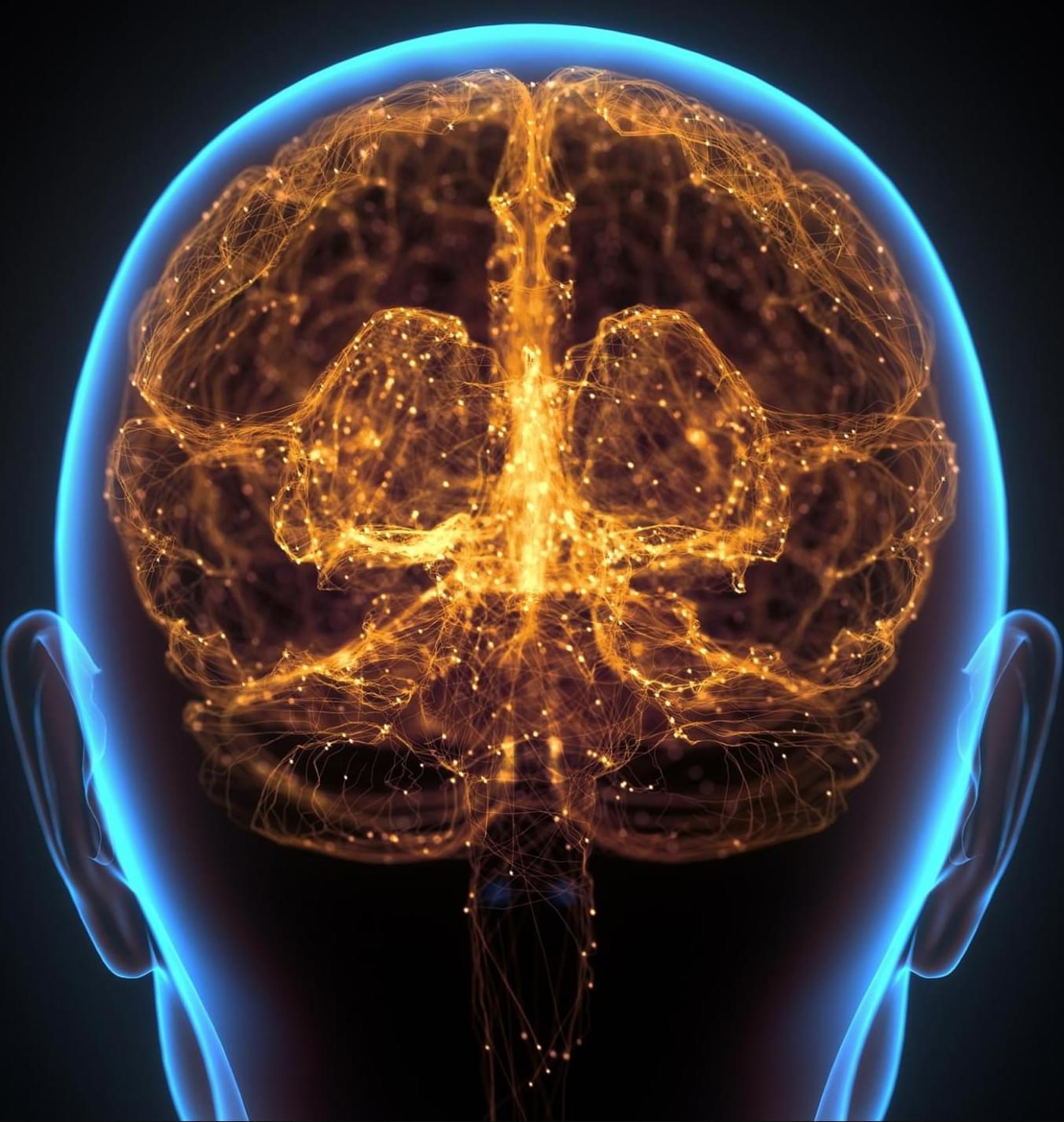
A split in early brain development helped researchers grow human hindbrain neurons that could shed light on SMA and ALS.
The human hindbrain, the region at the back of the brain that helps control breathing and swallowing, has been difficult to study in the laboratory. For decades, scientists have struggled to grow its neurons, leaving them without an important tool for investigating diseases that gradually take away those abilities.
Researchers led by Stanford Medicine have now grown functional human hindbrain motor neurons, the nerve cells that control muscles, by identifying a developmental split that begins as an embryo takes shape. Their work suggests that making these cells requires a different starting point from the one that produces the brain’s other major regions.