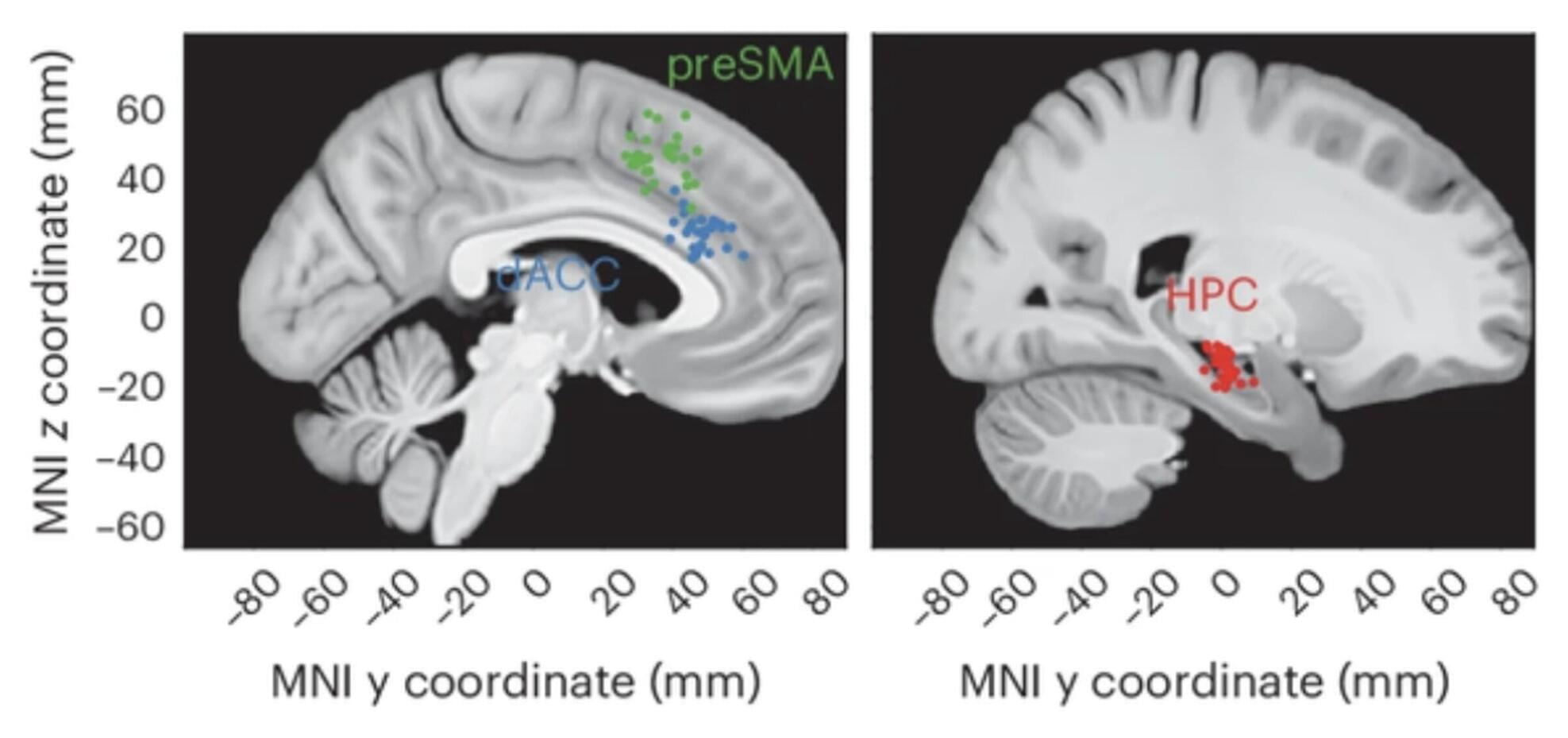
While humans are completing a task, they can temporarily store information in their minds while also manipulating and adapting it based on changing circumstances. To support this capability, known as working memory, the brain needs to hold onto important context about a task, updating it when rules, goals or circumstances change.
Researchers at Cedars-Sinai Medical Center, the University of Toronto and other institutions recently carried out a study aimed at better understanding how neurons preserve context over time as the goals of an ongoing task change. Their findings, published in Nature Human Behaviour, suggest that the brain can represent the same information through different patterns of neuronal activity that vary in stability and flexibility.
“We were inspired by the remarkable ability of an individual to relentlessly pursue a goal over long periods of time, while still remaining flexible and encoding information about a changing environment,” Hristos S. Courellis, first author of the paper, told Medical Xpress.