Neutrinos are pervasive yet intangible particles that permeate the universe, streaming through whole planets, stars and our bodies by the trillions each second. The elementary particles are often described as “ghostly” for their near-zero mass and elusive nature, as they have very little interaction with normal matter.
Since their discovery in 1956, neutrinos have continued to surprise physicists with their unexpected properties and behaviors. For instance, the particles come in multiple “flavors” and can morph from one to another like subatomic shape-shifters. Neutrinos may also be their own antiparticles, in a Jekyll-and-Hyde-like quantum duality. And their extremely weak interactions make them nearly impossible to detect.
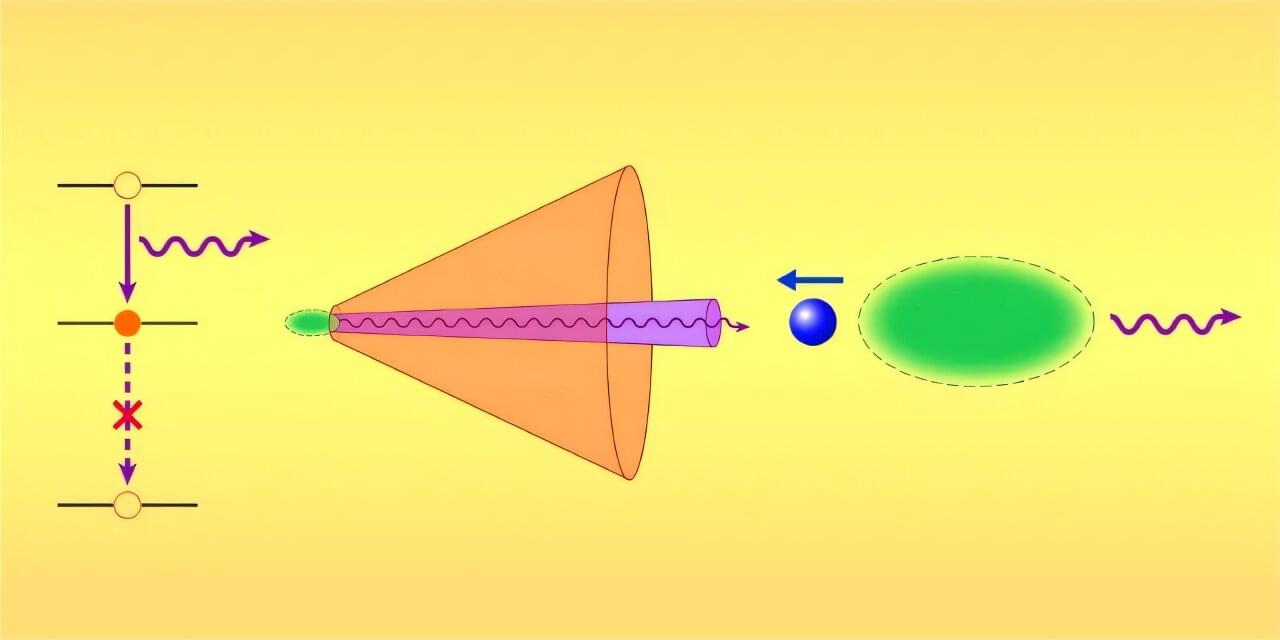
Last year, scientists seemed to add to the particles’ mystique with a concept for a neutrino laser. They proposed that a concentrated beam of neutrinos could be produced by cooling a cloud of radioactive atoms to nanokelvin temperatures, one-billionth that of interstellar space.