It was mid-2020, and Patrick Varilly, a software engineer and data scientist, was stuck at home, eager to help the world navigate the ongoing COVID-19 pandemic. He reconnected with Pardis Sabeti, a core institute member of the Broad Institute who was at the forefront of analyzing how the SARS-CoV-2 virus was spreading, and with Ben Fry, her longstanding collaborator and principal at Fathom Information Design, a software firm known for tackling complex data problems. Varilly had worked closely with Sabeti and Fry at MIT more than 20 years earlier.
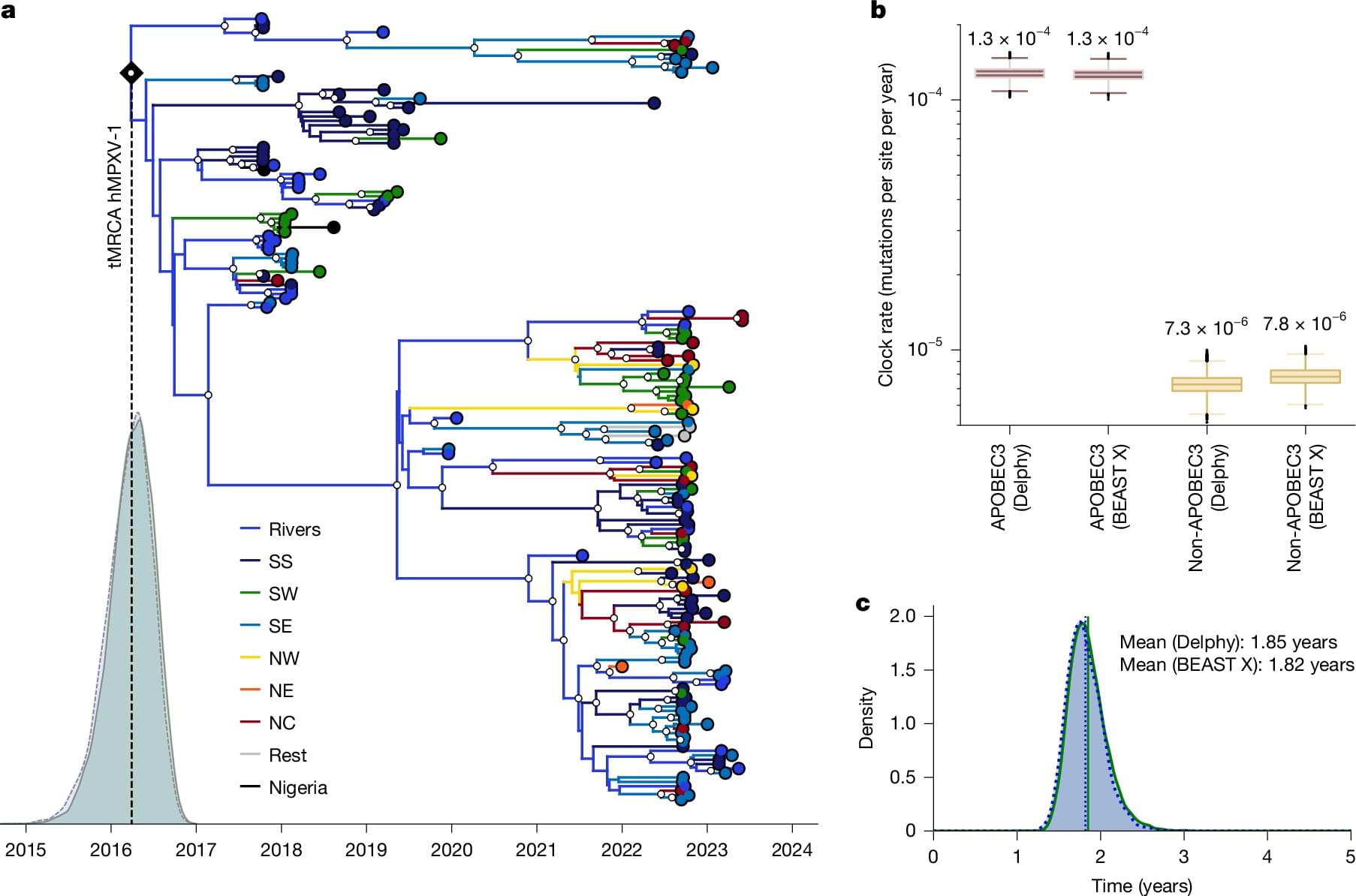
At the time, Sabeti, Fry and their teams were studying thousands of SARS-CoV-2 genomes from COVID-19 patients to reconstruct the path of viral transmission and identify which viral variants were emerging. Normally, retracing that path—by mapping how different variants are genetically related to each other in what’s called a phylogenetic tree—takes a lot of time and computing power.
Varilly, Sabeti and Fry saw an opportunity to accelerate the process while making data more accessible and easier to interpret. The result is Delphy, a new platform for rapid, interactive phylogenetic analysis. In a paper published in Nature, the researchers report how they rebuilt state-of-the-art phylogenetic tree models to make them faster, more efficient and scalable while maintaining the models’ accuracy. Because Delphy runs entirely within a web browser, anyone with a laptop can perform these analyses without specialized training, software or computing infrastructure.