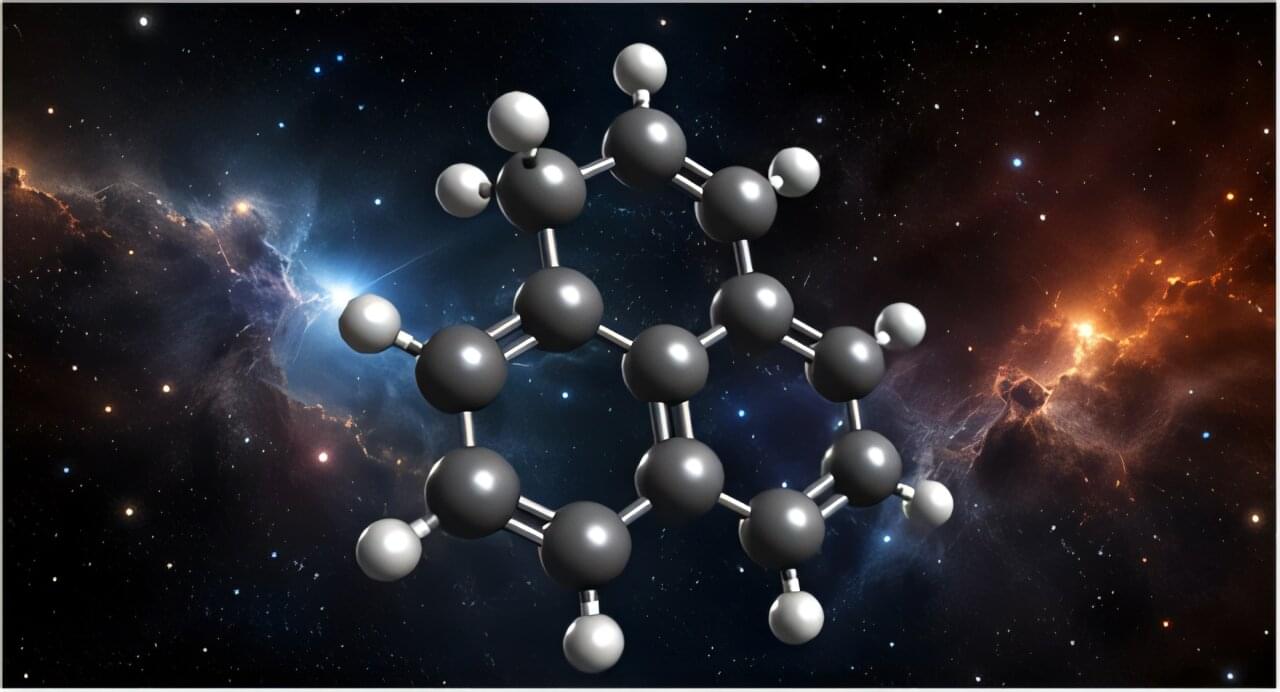
Before there was Earth, there was chemistry. In the unimaginable cold, dark clouds where stars and planets are born, carbon molecules assemble into more complex forms—starting a chemical journey that could eventually deliver some of life’s basic ingredients to young planets. There’s only one problem: These molecules need heat to form. At least that’s what scientists have long believed. But new research from FIU chemist Alexander Mebel reveals such chemistry can actually happen at temperatures nearing absolute zero, which is −460°F (−273°C).
On Earth, these complex carbon molecules are usually associated with extremely hot temperatures, such as those associated with combustion. It has long been presumed that heat is necessary for these molecules to assemble in space. But when astronomers detected one of these molecules last year, it was found in the cold, dark region known as Taurus Molecular Cloud-1. This region, where solar systems begin, is anything but hot. Temperatures there hover around −443°F (−264°C).
Mebel’s research, published in The Journal of Physical Chemistry A, offers a possible answer as to how these molecules formed there and could improve understanding of how worlds like Earth can form.