Two new studies from Johns Hopkins University are providing scientists with an unprecedented view of how human cells repair one of the most dangerous forms of genetic damage: a break that severs both strands of the DNA double helix.
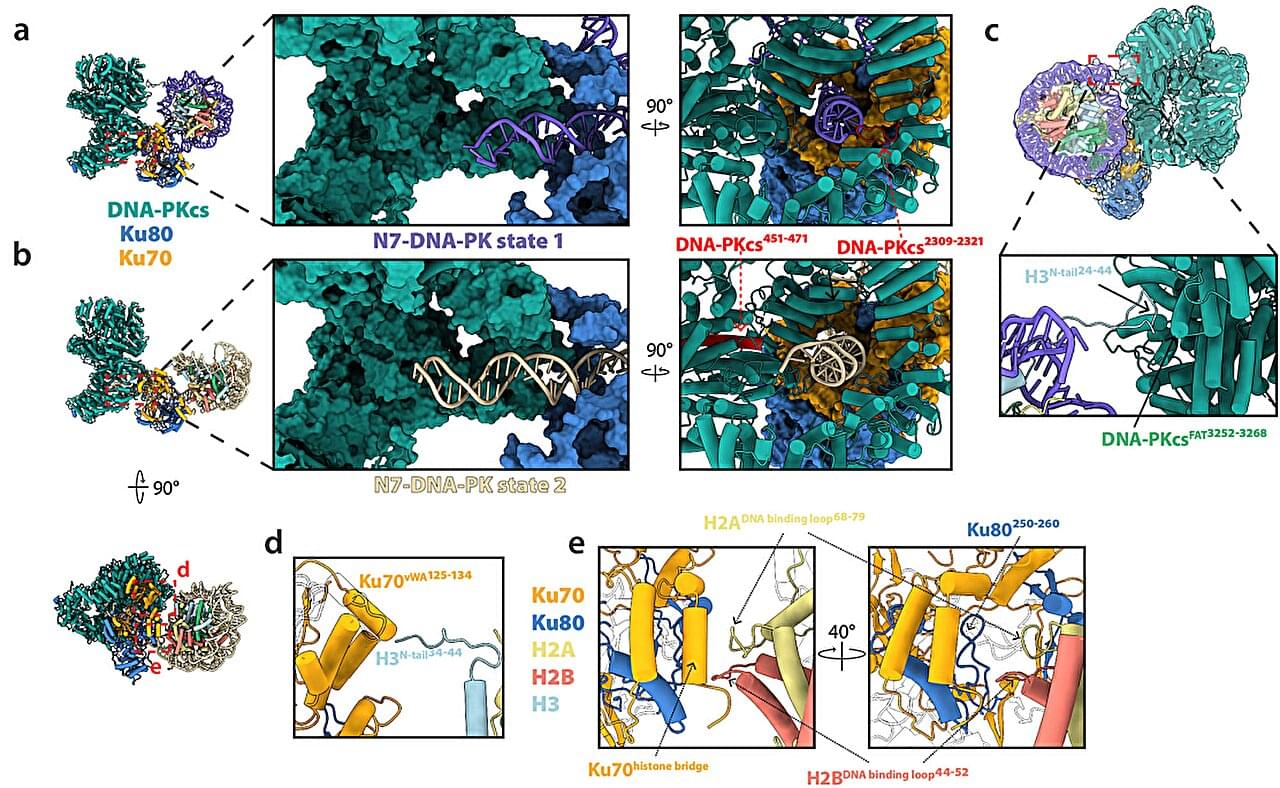
Published back-to-back in Nature Communications, the studies examine different stages of a repair process called “non-homologous end joining,” or NHEJ. Together, the findings show how cells gain access to damaged DNA packaged inside chromatin and assemble a versatile collection of molecular tools to prepare and reconnect its broken ends.
The research could ultimately contribute to better cancer treatments and more predictable gene-editing techniques. Its immediate importance, however, lies in improving scientists’ fundamental understanding of a repair system that protects the human genome every day.