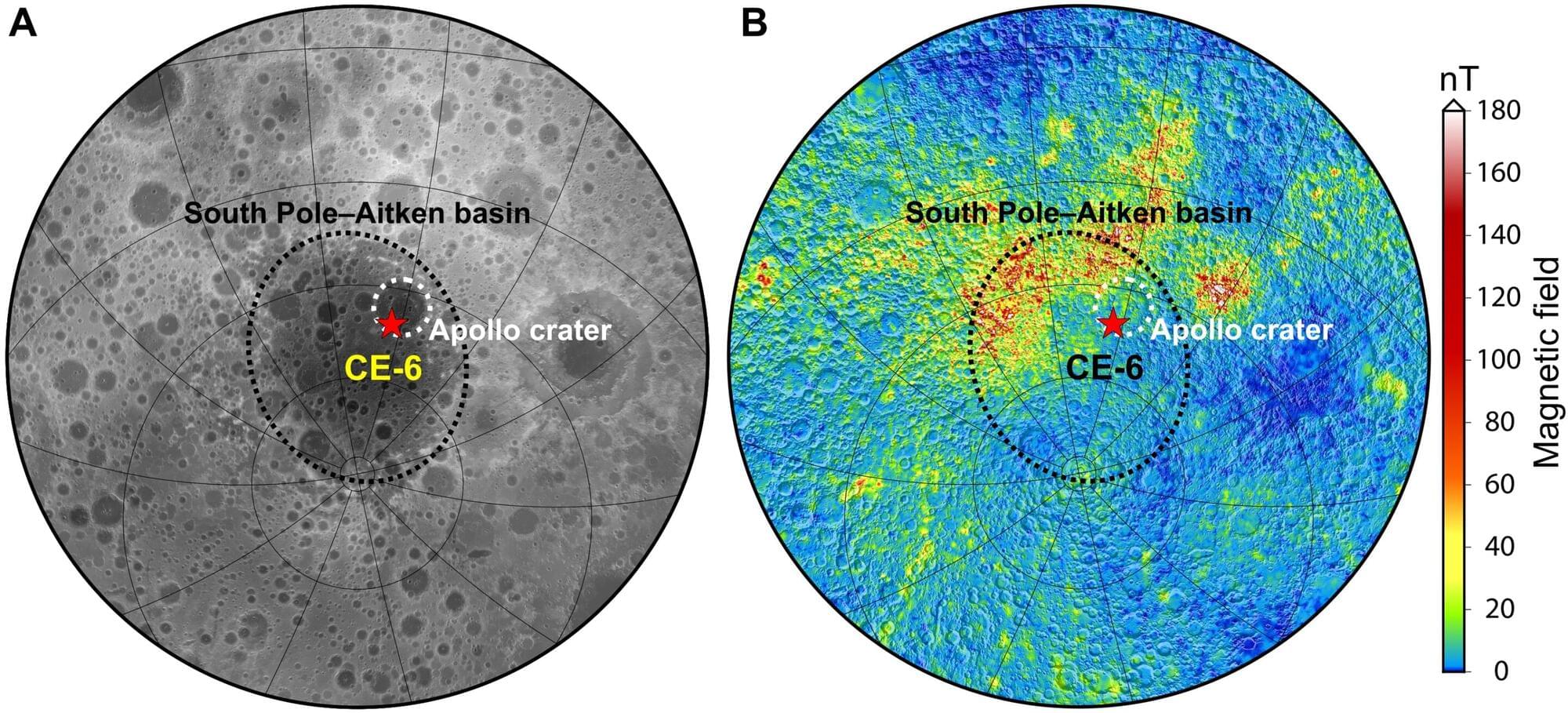
The moon no longer has a global magnetic field, but lunar rocks and soils still contain records of ancient magnetism. Studying the magnetic minerals in these samples can help scientists understand how the moon’s magnetic field evolved over time.
Researchers examining impact-glass particles containing metallic iron from Chang’e-6 lunar soil samples discovered face-centered cubic γ-Fe—the first time this iron phase has been identified in natural lunar samples.
The study, led by professor Du Haifeng from the High Magnetic Field Laboratory of the Hefei Institutes of Physical Science (HFIPS) of the Chinese Academy of Sciences (CAS), was published in the Proceedings of the National Academy of Sciences on Sept. 16.